
AI data centers are turning electricity into a strategic input for Europe’s digital economy. The key question is no longer only where companies can find land, talent and customers, but where they can secure large amounts of reliable, affordable and low-carbon power.
For investors, this matters because the AI boom connects technology companies with utilities, grid operators, power developers, equipment makers, real estate owners and local governments. A data center that looks attractive on a map may be impossible to build on schedule if the grid cannot connect it or if power prices make the business case weak.
What makes an AI data center different
A data center is a building, or group of buildings, designed to house computing equipment, networking gear, cooling systems and backup power. Traditional data centers support websites, cloud storage, payments, streaming, software and enterprise IT. AI data centers do all of that but are also built for workloads such as training and running large machine-learning models.
The difference is intensity. AI workloads often rely on dense clusters of graphics processors or other accelerators. These chips draw a lot of electricity and produce a lot of heat. That heat then has to be removed through air cooling, liquid cooling or a combination of both. In practice, a modern AI campus is closer to an industrial power customer than a conventional office development.
This is why searches for AI data centers in Europe increasingly overlap with searches for electricity demand, grid constraints and energy performance. The physical building is only one part of the story. The power connection, cooling design and energy contract can determine whether a project is viable.
Why Europe’s grid is under pressure
Europe already faces a difficult energy balancing act. It is electrifying transport, heating and industry while trying to reduce emissions and maintain competitive power prices. AI data centers add another large, location-sensitive customer to that system.
The challenge is not simply total annual electricity consumption. It is also timing, location and reliability. Data centers need power around the clock. They prefer stable electricity supply, resilient substations and multiple routes to the grid. A region may have plenty of renewable generation on paper but still lack the transmission capacity to move that power to a specific site when it is needed.
Grid connection delays have become an important constraint in several markets. If a data center has to wait years for a connection, the developer may look for another location, build dedicated power assets, or negotiate with a utility for a phased connection. This is one reason some projects consider on-site generation, private wires, battery storage or direct power purchase agreements.
For households and local communities, the issue can be sensitive. A large data center may compete with other users for grid capacity, land, water or skilled construction labor. It can also bring tax revenue, jobs during construction and demand for local services. The outcome depends heavily on planning rules, transparency and whether the project strengthens or strains local infrastructure.
Why power costs shape the data center map
Electricity is one of the major operating costs for a data center. A small difference in power price can matter when a facility runs continuously and houses high-value computing equipment. That is why Europe’s data center map is not only a map of population centers and fiber routes; it is also a map of power markets.
Major European hubs include places with strong connectivity, deep customer bases and established cloud ecosystems. London, Frankfurt, Amsterdam, Paris and Dublin are often discussed as core markets for conventional data centers. AI-focused growth, however, can also favor areas with available land, cooler climates, renewable resources, nuclear generation, hydropower or spare grid capacity.
Investors should watch several practical factors when assessing a data center market:
- Grid availability: Can the site receive the required connection, and on what timetable?
- Power price exposure: Is electricity bought at spot prices, under long-term contracts, or through a dedicated arrangement?
- Power quality: Does the local grid offer the reliability needed for high-density computing?
- Cooling requirements: Does the climate or water availability support efficient cooling?
- Permitting: Are local authorities supportive, cautious or actively restrictive?
- Connectivity: Is the site close enough to fiber networks and customers for the intended workload?
Latency-sensitive services may need to sit near major cities. Some AI training workloads can be located farther away if power is cheaper and connectivity is sufficient. That distinction matters because it broadens the range of possible sites, but it does not remove the need for robust infrastructure.
The role of nuclear, renewables and gas
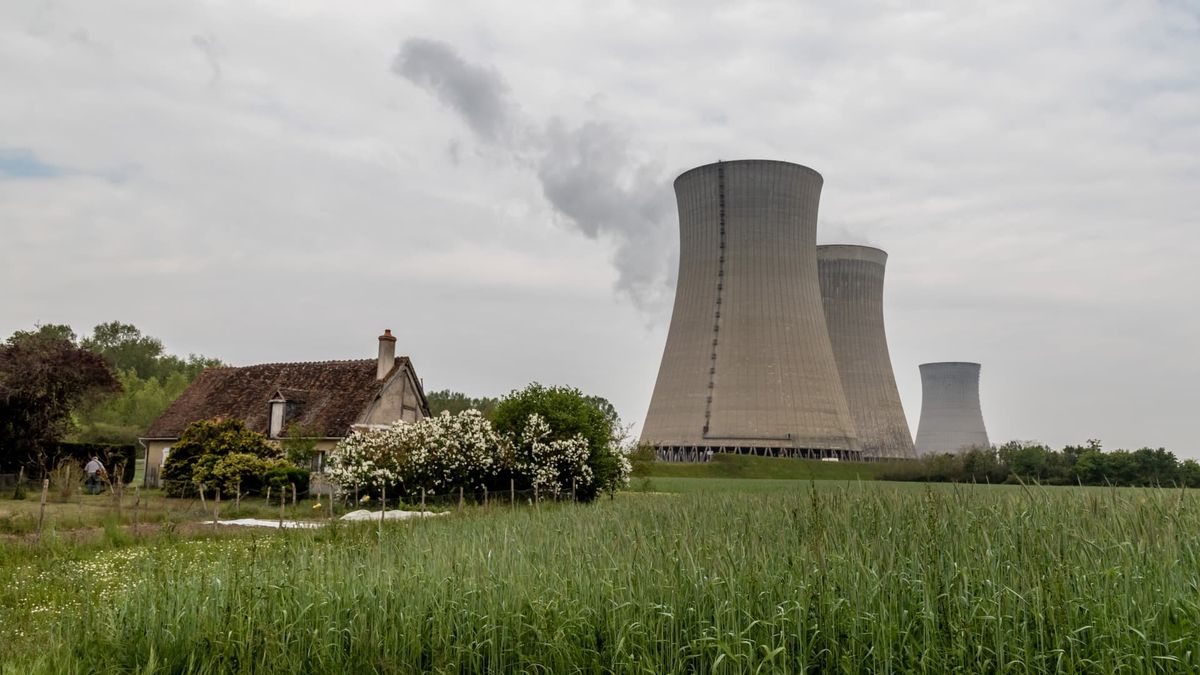
No single power source is a perfect answer to AI data center demand. The attraction of nuclear power is that it can provide large volumes of low-carbon electricity at high availability. For countries with existing nuclear fleets, this can be a competitive advantage when courting energy-intensive digital infrastructure.
But nuclear power is not a quick fix. Large reactors are complex, capital-intensive projects with long development timelines. Small modular reactors, often described as reactors of up to 300 megawatts, are discussed as a potential future option for industrial users and data centers. Their promise is smaller scale and repeatable manufacturing, but investors should be careful: commercial deployment, licensing, supply chains and first-of-a-kind risks remain central questions in many markets.
Renewables are also important. Wind and solar can offer low operating costs and help companies meet climate commitments. The challenge is variability. A data center cannot run only when the wind blows or the sun shines, so renewables usually need to be paired with grid backup, storage, flexible demand, hydro, nuclear, gas or other firm resources.
Gas-fired generation can provide flexibility and faster build times than some alternatives, but it exposes operators to fuel-price volatility and emissions scrutiny. Hydropower is attractive where available because it can combine low-carbon generation with flexibility, but suitable sites are geographically limited. Batteries can support reliability and shift power over short periods, though they do not replace the need for firm energy over long durations.
The practical result is that AI data center power strategies are likely to be mixed. A large operator might combine grid power, renewable power purchase agreements, backup generators, batteries, and possibly dedicated generation. The exact mix will vary by country, regulation and project design.
What investors should watch
The AI data center buildout can affect more than cloud and semiconductor companies. It can influence utilities, grid equipment makers, engineering firms, cooling specialists, construction companies, power producers and real estate investment vehicles. However, the theme is not automatically positive for every company connected to it.
Key indicators to monitor include:
- Connection queues and grid upgrades: Long queues can delay revenue and increase capital needs.
- Electricity contracts: Long-term power agreements may reduce uncertainty, but terms matter.
- Capital intensity: AI campuses require expensive chips, electrical systems and cooling infrastructure.
- Utilization: A data center earns its keep only if customers use the capacity at attractive margins.
- Regulation: Energy reporting, efficiency standards, water rules and local planning decisions can change project economics.
- Customer concentration: Facilities dependent on a small number of hyperscale customers may carry negotiation risk.
Retail investors should also separate durable infrastructure demand from short-term market excitement. AI demand may grow, but individual projects can be delayed, repriced or cancelled. A company can be exposed to the right theme and still overpay for land, underestimate power costs or face a local backlash.
Environmental and community risks
AI data centers raise legitimate environmental questions. Their electricity use can increase pressure on power systems if new demand is not matched with new clean supply or grid investment. Cooling can also involve water consumption, although designs vary widely and some facilities use closed-loop or air-based systems to reduce water needs.
Local impacts include noise from cooling equipment and backup generators, visual changes to industrial land, construction traffic and concerns about whether data centers create enough permanent jobs relative to their energy use. There is no universal answer to how far someone should live from a data center. The relevant issues are zoning, noise limits, emissions from backup power, traffic, flood risk and the quality of local enforcement.
Common mistakes include assuming all data centers are the same, treating announced capacity as guaranteed, ignoring the difference between energy and grid connection, and assuming that a renewable contract means a facility is powered by clean energy every hour. The strongest projects tend to be those with credible power access, efficient design, community acceptance and customers willing to pay for the capacity.
Frequently asked questions
Which European country has the most AI data centers?
There is no single public ranking for AI-specific data centers. For broader data center activity, the United Kingdom, Germany, the Netherlands, France and Ireland are among Europe’s most important markets, while Nordic countries can be attractive for low-carbon power and cooling conditions.
Who provides power for AI data centers?
Power can come from local utilities, national grids, renewable power purchase agreements, dedicated generators, batteries and backup systems. Large operators often use a mix rather than relying on one source.
Where do AI data centers get their power from?
They draw electricity from the grid unless they have private or on-site generation arrangements. The underlying energy mix depends on the country and can include nuclear, wind, solar, hydro, gas, coal or imports from neighboring markets.
Why are AI data centers controversial?
They can bring investment and digital infrastructure, but they also use large amounts of electricity, may require grid upgrades, can affect water use and may create local noise or planning concerns. The controversy is usually about trade-offs rather than the technology alone.
This article is for general information only and is not investment advice. Do your own research or consult a licensed adviser before making financial decisions.
Related articles
- Why Nvidia Earnings Move AI Stocks
- Super Micro, AI Servers and Guidance Risk
- How Tariffs Hit E-Commerce Stocks
Forrás: eredeti cikk