

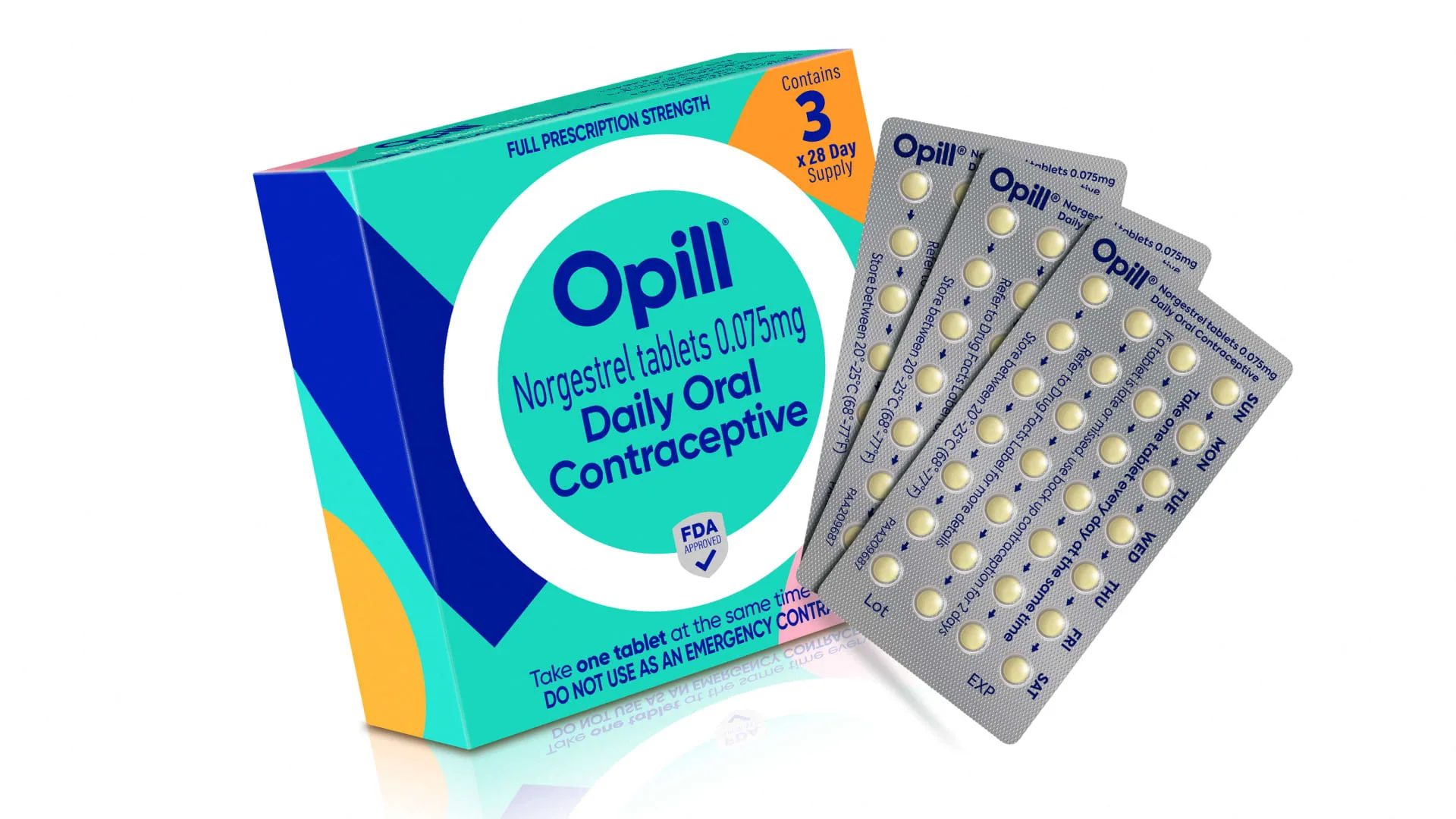
Opill can be bought without a prescription, but that does not automatically mean every insurance plan will pay for it at the register. The key distinction is access versus reimbursement: over-the-counter status removes the need to see a clinician to buy the pill, while insurance coverage still depends on plan rules, state law, pharmacy billing systems and sometimes whether a prescription is on file.
What Opill is and why OTC status matters
Opill is a daily oral contraceptive containing norgestrel, a progestin. It is often described as a progestin-only pill, meaning it does not contain estrogen. Its over-the-counter status is important because consumers can buy it in stores or online without first scheduling a medical appointment, obtaining a prescription or returning to a clinician for refills.
That can reduce practical barriers for people who have difficulty getting appointments, lack a regular clinician, live far from health services, need privacy, or cannot easily take time off work or school. It also changes the commercial model for contraception. Instead of being treated only as a prescription drug dispensed behind the pharmacy counter, Opill can sit closer to the consumer health category, alongside products bought directly by shoppers.
For investors and industry watchers, this matters because it sits at the intersection of consumer health, pharmacy retail, insurance reimbursement and reproductive-health policy. Demand may depend not only on medical need, but also on shelf availability, pricing, insurance coverage, privacy, brand trust and public understanding of how daily pills work.
Why insurance coverage is not automatic
The Affordable Care Act generally requires most non-grandfathered private health plans to cover FDA-approved contraceptive methods without cost-sharing when they are prescribed. But over-the-counter products create a more complicated question: if no prescription is needed to buy the product, will the plan still process and pay the claim?
In practice, consumers may encounter several different arrangements:
- Covered with a prescription: A plan may cover Opill when a clinician writes a prescription, even though the consumer could legally buy it without one.
- Covered without a prescription: Some plans or pharmacy benefit managers may allow eligible members to obtain Opill at no out-of-pocket cost directly through participating pharmacies.
- Not covered as an OTC product: Some plans may treat it like other over-the-counter items and require the consumer to pay the retail price.
- State-specific coverage: Some states have rules requiring certain state-regulated plans to cover over-the-counter contraception, but those rules may not apply to self-funded employer plans.
- Medicaid variation: Medicaid coverage can depend on state policy, pharmacy participation and whether the pharmacy can submit the claim correctly.
This is why two people standing in the same store may face different prices. One may have a plan that processes Opill with no cost-sharing, while another may need a prescription for coverage or may have to pay cash.
What consumers may pay and how to reduce costs
The out-of-pocket cost for Opill depends on where it is purchased, package size, insurance status and whether any discount or assistance option is available. Retail prices can change, and online prices may differ from in-store prices. Multi-month packs may appear cheaper per month than single packs, but they require a larger upfront payment.
Consumers trying to lower the cost can consider several routes:
- Ask the insurer or pharmacy benefit manager first. The most useful question is not only whether Opill is covered, but whether it is covered without a prescription and at which pharmacies.
- Check whether a prescription would unlock coverage. A prescription may be unnecessary for purchase, but it may still be useful for reimbursement under some plans.
- Use a participating pharmacy. A plan that covers Opill may require the product to be obtained at an in-network pharmacy that can bill the claim electronically.
- Look for manufacturer or retailer assistance. Assistance programs, coupons or discounts may exist, but eligibility and savings can change.
- Consider HSA or FSA rules. Some consumers may be able to use tax-advantaged health accounts for eligible over-the-counter products, depending on their plan administrator’s rules.
The main mistake is assuming that buying OTC and getting insurance reimbursement are the same process. They are not. Paying cash and submitting a receipt later may not work if the plan requires a pharmacy claim, a prescription or a specific retailer.
How to check coverage before you buy
Because coverage rules vary, a short check before purchase can prevent surprise costs. The consumer can call the number on the insurance card or use the plan’s app, but the wording matters. Asking whether birth control is covered may produce a general answer. Asking specifically about over-the-counter Opill is more likely to reveal the real rule.
Useful questions include:
- Is Opill covered under my plan as an over-the-counter contraceptive?
- Do I need a prescription for the plan to pay?
- Can the pharmacy bill it directly, or do I have to submit a claim?
- Which pharmacies are in network for this product?
- Will there be any copay, coinsurance or deductible?
- Will an explanation of benefits be sent to the policyholder?
The last question is especially important for dependents on a parent’s or spouse’s insurance plan. Even when contraception is covered, insurance paperwork can create privacy concerns. An explanation of benefits may show that a service or product was obtained, even if it does not disclose every detail. Some states and plans offer confidential communications options, but consumers usually need to request them in advance.
Side effects, effectiveness and common mistakes
Opill is not emergency contraception and it is not the same as Plan B or other morning-after pills. Opill is designed to be taken every day to prevent pregnancy before sex occurs. Emergency contraception is used after unprotected sex or contraceptive failure and follows different instructions.
Like other hormonal contraceptives, Opill may cause side effects. Commonly discussed effects for progestin-only pills include changes in bleeding patterns, spotting, nausea, headache, breast tenderness, dizziness or cramps. Not everyone experiences these, and some effects may improve with time. People with certain medical histories, including breast cancer, or those taking medications that may interact with hormonal contraception should read the label carefully and consult a healthcare professional.
Timing matters. Progestin-only pills typically require consistent daily use, and missed or late pills can reduce protection. Consumers should follow the package instructions on what to do after a missed dose and when to use backup contraception. Opill also does not protect against sexually transmitted infections, so condoms may still be relevant for STI prevention.
Common mistakes include confusing OTC availability with universal affordability, expecting insurance to work at every checkout lane, missing doses because the pill is bought like an ordinary consumer item, and overlooking drug interactions. Another mistake is assuming that a product’s reviews online can replace the label or medical advice. Reviews may reflect individual experiences, but they do not determine whether the product is right for a particular person.
What investors and health-care watchers should monitor
Opill’s broader significance is not limited to one product. It is a test case for how the U.S. health system handles preventive products that move from prescription-only to over-the-counter access. The easier a product is to buy, the more consumer marketing, retail placement and price sensitivity matter. The more insurance pays, the more pharmacy benefit managers, Medicaid programs and employer plan designs matter.
Key things to watch include insurer adoption of no-prescription coverage, state coverage mandates, pharmacy billing workflows, manufacturer assistance programs, retailer pricing and consumer education. For companies in consumer health, OTC contraception may show whether a prescription-to-OTC switch can expand reach without losing affordability. For insurers and policymakers, it raises the question of whether preventive care benefits should follow the product even when the prescription requirement disappears.
For consumers, the practical takeaway is straightforward: Opill may be available without a prescription, but the lowest-cost route may still require checking insurance rules before buying. This is not investment, legal or medical advice; it is a framework for understanding the coverage issues and the questions to ask.
Frequently asked questions
Will insurance cover birth control pills?
Many health plans cover prescription birth control without out-of-pocket cost, but over-the-counter products can be treated differently. Opill may be covered by some plans without a prescription, covered only with a prescription, or not covered as an OTC purchase. Check your specific plan before buying.
Is Opill the same as Plan B?
No. Opill is a daily birth control pill used on an ongoing basis to help prevent pregnancy. Plan B and similar products are emergency contraception used after unprotected sex or contraceptive failure. They are not used the same way.
Will the insurance holder know I bought birth control?
Possibly. If insurance is used, an explanation of benefits or pharmacy record may be visible to the policyholder, depending on the plan and state rules. If privacy is a concern, ask the insurer about confidential communications before using coverage.
Why did my insurance deny Opill?
Common reasons include the plan not covering OTC products, requiring a prescription for reimbursement, using an out-of-network pharmacy, a billing-system issue, or state rules that do not apply to your type of plan. Ask the insurer what requirement was not met and whether a prescription or different pharmacy would change the outcome.
This article is for general information only and is not investment advice. Do your own research or consult a licensed adviser before making financial decisions.
Related articles
- Sports Betting Taxes and College Athlete Pay
- Why the Red Sea Route Matters to Global Trade
- Why Domestic Airline Demand Slows
Forrás: eredeti cikk