
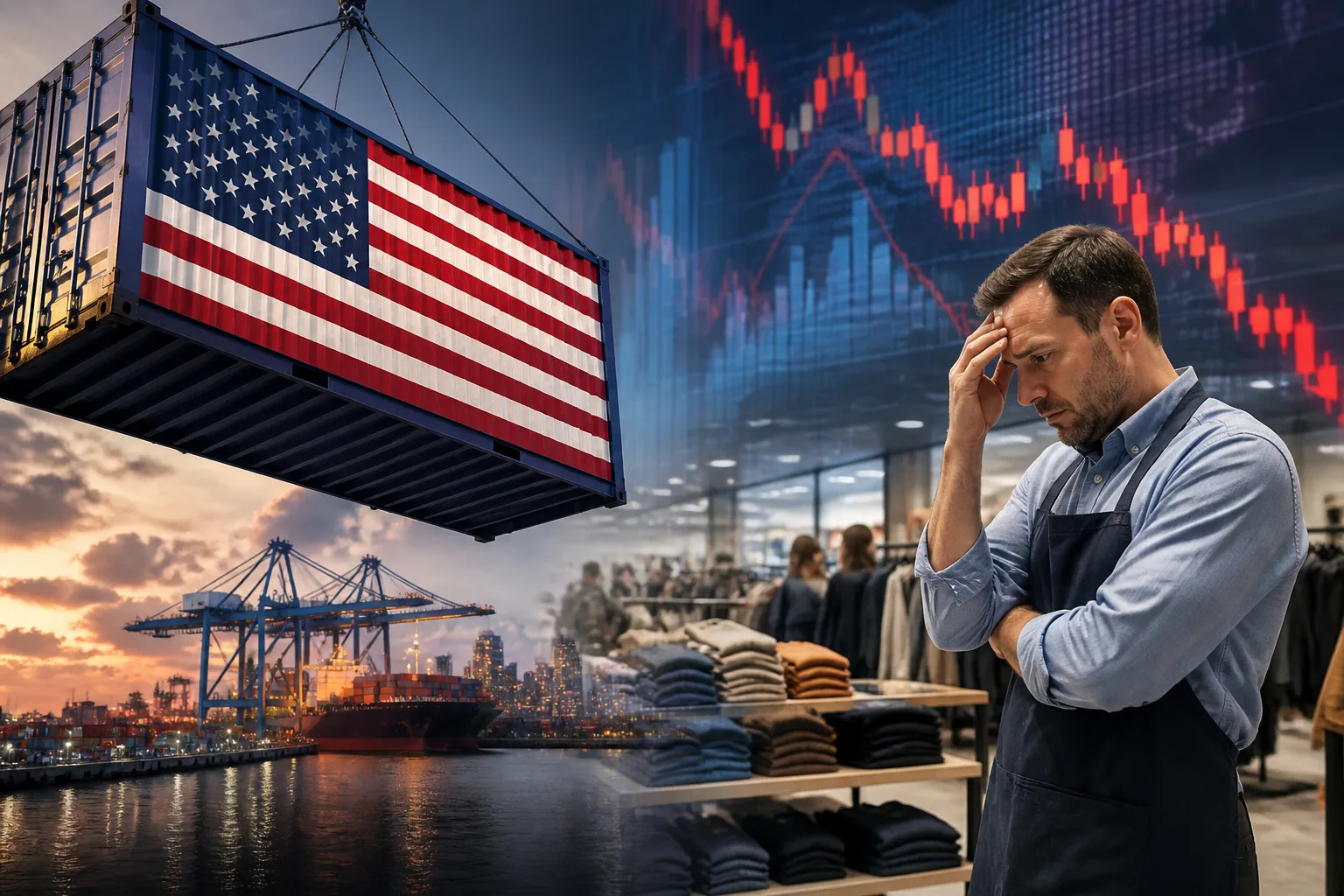
Retail stocks are facing a familiar but difficult problem: higher import costs from tariffs are arriving at the same time consumers are becoming more selective. For companies that rely on global supply chains, especially those sourcing apparel, electronics, home goods, toys, footwear, and seasonal merchandise, the tariff impact can quickly show up in earnings margins if retailers cannot pass those costs on to shoppers.
The challenge is not simply that goods can become more expensive to bring into the United States. It is that retailers operate in a highly competitive market where pricing power varies widely. A luxury brand, a discount chain, and a big-box retailer may all face higher input costs, but their ability to protect profitability can be very different.
Why tariffs pressure retail margins
Tariffs can function like an added cost on imported goods. For retailers, that cost has to be absorbed somewhere in the business model. Management teams generally have a few options, none of them painless:
- Raise prices: This protects gross margins but may weaken demand if shoppers push back.
- Absorb the cost: This supports sales volume but compresses earnings margins.
- Renegotiate with suppliers: This can help, but suppliers may already be under cost pressure.
- Shift sourcing: Moving production to other countries can reduce exposure, but it takes time and may introduce new costs or quality risks.
- Change product mix: Retailers may promote higher-margin private-label goods or reduce exposure to tariff-sensitive categories.
In practice, many retailers use a combination of these strategies. The issue for investors is timing. Tariff-related costs can hit quickly, while supply-chain adjustments often take time. That mismatch can create near-term pressure on profitability even for companies with competent management.
Consumer spending is the key variable
The tariff impact on retail stocks depends heavily on the health of consumer spending. If households feel confident and wages are stable, retailers may have more room to raise prices without losing too much traffic. But when shoppers are stretched, even modest price increases can shift behavior.
Consumers can trade down to cheaper brands, delay discretionary purchases, wait for promotions, or move spending toward essentials. That matters because not all retail categories are equally vulnerable. Grocery, pharmacy, and basic household goods usually have steadier demand. Apparel, furniture, electronics, home improvement, and specialty retail tend to be more cyclical and more sensitive to price increases.
This creates a divide within the sector. Discount retailers may benefit from trade-down behavior, although they are not immune to tariff costs. Premium retailers may hold up if their customer base is less price-sensitive. Mid-tier retailers can be squeezed from both sides: costs rise, but shoppers still demand promotions.
What investors should watch in earnings reports
For stock market analysis, headline revenue growth is not enough, especially when tariff pressures can affect margins in uneven ways. A retailer can report solid sales while profitability deteriorates underneath. Investors evaluating retail stocks should focus on the details that show whether tariff costs are being managed effectively.
- Gross margin commentary: Look for management language about import costs, promotions, markdowns, and pricing actions.
- Operating margin trends: Higher freight, sourcing, labor, or inventory costs can offset sales gains.
- Inventory levels: Elevated inventory may force discounts, especially if consumer demand softens.
- Comparable sales: Same-store or comparable sales help show whether price increases are masking weaker traffic.
- Guidance changes: Lower profit outlooks can signal that management expects cost pressure to persist.
- Private-label strategy: Retailers with strong owned brands may have more flexibility on pricing and sourcing.
Management tone is also important. Companies that provide clear explanations of sourcing exposure, pricing strategy, and inventory plans are often better positioned than those that offer vague assurances. Investors do not need perfect forecasts, but they do need evidence that the company understands the pressure points.
Which retailers are more exposed?
Retailers with heavy reliance on imported merchandise from tariff-affected regions are often the most exposed. This often includes sellers of apparel, footwear, accessories, consumer electronics, furniture, home décor, and general merchandise. Companies with limited pricing power or a customer base that is highly sensitive to discounts may face the most margin pressure.
By contrast, retailers with diversified sourcing, strong supplier relationships, loyal customers, or a larger mix of essential goods may be more resilient. Scale can also help. Large retailers may have more leverage with vendors, better logistics capabilities, and more data to adjust pricing by category or region. However, scale does not eliminate the tariff burden; it only provides more tools to manage it.
The broader market implications
The tariff margin squeeze is not just a retail-sector issue. Retailers are closely tied to the broader economy because they reflect household demand in real time. If companies raise prices to protect margins, that can contribute to inflation concerns. If they absorb costs, corporate earnings may weaken. If consumers pull back, revenue growth can slow across discretionary categories.
For investors, the main takeaway is to be selective. Retail stocks should not be treated as a single trade. The strongest opportunities are likely to be companies with pricing power, disciplined inventory management, flexible supply chains, and a clear understanding of their customers. The riskiest names are those dependent on promotions, exposed to discretionary categories, and already operating with thin earnings margins.
Tariffs do not automatically make retail stocks uninvestable, but they raise the bar. In the current environment, revenue growth alone is not enough. The retailers that can defend margins without alienating shoppers will be the ones most likely to stand out.
Sources
- www.cbp.gov
- Section 301 Trade Remedies Frequently Asked Questions | U.S. Customs and Border Protection
- www.cbp.gov
- public-inspection.federalregister.gov