

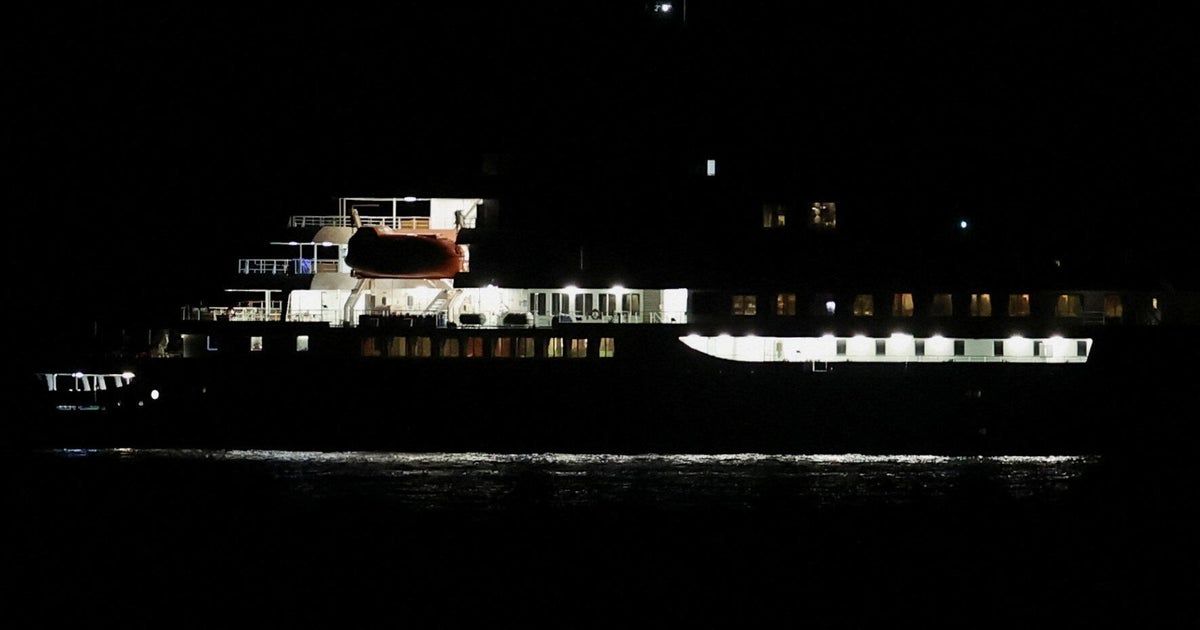
A Dutch-flagged cruise ship that was hit by a deadly hantavirus outbreak reached Spain’s Canary Islands early Sunday morning, where health officials will begin the complex process of evacuating the passengers and most of the crew, and repatriating them to their respective countries.
The MV Hondius, currently carrying nearly 150 people from more than 15 countries, including 17 Americans, had set sail earlier this week from Cape Verde to the port of Granadilla on Tenerife — the largest of the Canary Islands — after Spain agreed to take the ship.
Video from Reuters showed the ship near the port of Granadilla. Hondius was escorted by a Spanish Civil Guard vessel, Agence France-Press journalists reported.
Pedro Nunes / REUTERS 
The World Health Organization has said that, so far, none of those still aboard were showing symptoms.
There are at least nine confirmed or suspected cases of hantavirus linked to the outbreak, including three fatalities, a Dutch couple and a German woman.
Oceanwide Expeditions, the ship’s operator, says that all passengers and a portion of the approximately 60 crew members will begin evacuating the ship Sunday using launch boats that carry a maximum of five to 10 people. The evacuation is being coordinated by WHO and several other health organizations. WHO Director-General Dr. Tedros Ghebreyesus traveled to Tenerife prior to the ship’s arrival.
After those people have disembarked, a skeleton crew will take on supplies and then begin the journey to Rotterdam, Netherlands, which is expected to take about five days, Oceanwide Expeditions said.
Chris McGrath / Getty Images 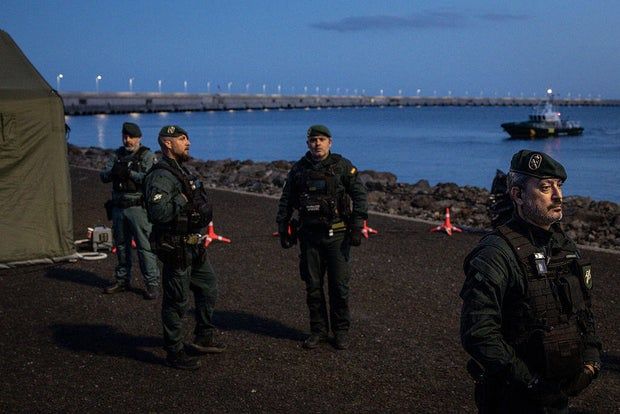
Once removed from the Hondius, the Americans will be flown back to the U.S. in a plane that was sent by the U.S. Centers for Disease Control and Prevention and the Department of Health and Human Services.
The CDC said it was sending a team of epidemiologists and medical professionals to the Canary Islands to “conduct an exposure risk assessment for each American passenger and provide recommendations for the level of monitoring required.”
The medical repatriation flight will land at Offutt Air Force Base in Omaha, Nebraska, and the Americans will be taken to a special biocontainment unit at the University of Nebraska Medical Center.
Michael Wadman, medical director of the National Quarantine Unit at the University of Nebraska Medical Center, said that each American will have their own room while they quarantine for an unspecified amount of time.
Hantaviruses are a family of diseases that are spread to people from rodents through urine, droppings or saliva, according to the CDC. It can take up to eight weeks after contact for symptoms to develop.
WHO says that the Andes strain, which is found in Latin America, is the only one that is known to be able to transmit the virus through human-to-human contact, with Ghebreyesus assessing the public risk as “low,” an assessment which was echoed by acting CDC director Dr. Jay Bhattacharya.
“Hantavirus is not spread by people without symptoms, transmission requires close contact, and the risk to the American public is very low,” Bhattacharya said in a statement Wednesday.
The source of the outbreak remains under investigation. However, prior to boarding the ship, the Dutch couple who died, a 70-year-old man and his 69-year-old wife, are believed to have spent weeks traveling through Argentina, Chile and Uruguay on a bird-watching trip in areas where the species of rodent known to carry the Andes virus is present, Ghebreyesus said this week.
The man developed symptoms on April 6 and died on the ship on April 11, WHO said, but no samples were taken because his symptoms were similar to those of other respiratory viruses, and hantavirus was not suspected at the time.
His wife then went ashore when the ship docked on the British territorial island of St. Helena. She showed serious symptoms on a flight to Johannesburg, South Africa, on April 25, and died in South Africa the following day, WHO said. Testing confirmed she had contracted hantavirus.
The German woman showed symptoms on April 28 and died aboard the ship on May 2, according to WHO.
Three other patients were flown off the ship to the Netherlands for emergency medical care this week, and a Swiss man who began showing symptoms after disembarking the ship was receiving care in Zurich. A British man was medically evacuated to South Africa, while another British national who had disembarked the ship is hospitalized on the island of Tristan da Cunha, a British territory.
Oceanwide Expeditions said 32 passengers from about a dozen countries had disembarked the Hondius in St. Helena, including the Dutch woman who died days later. Those American passengers who returned to the U.S. prior to the discovery of the outbreak were being monitored by state health agencies in California, Georgia, Texas, Virginia and Arizona.
The Hondius set sail for its cruise April 1 from Ushuaia, Argentina, which took it to several islands in the south Atlantic, including the South Georgia and South Sandwich Islands, Tristan da Cunha, Gough Island and then St. Helena from April 21 to April 24.
The vessel then anchored off the coast of Cape Verde, an archipelago located off West Africa, for several days before heading to the Canary Islands.
Forrás: eredeti cikk