
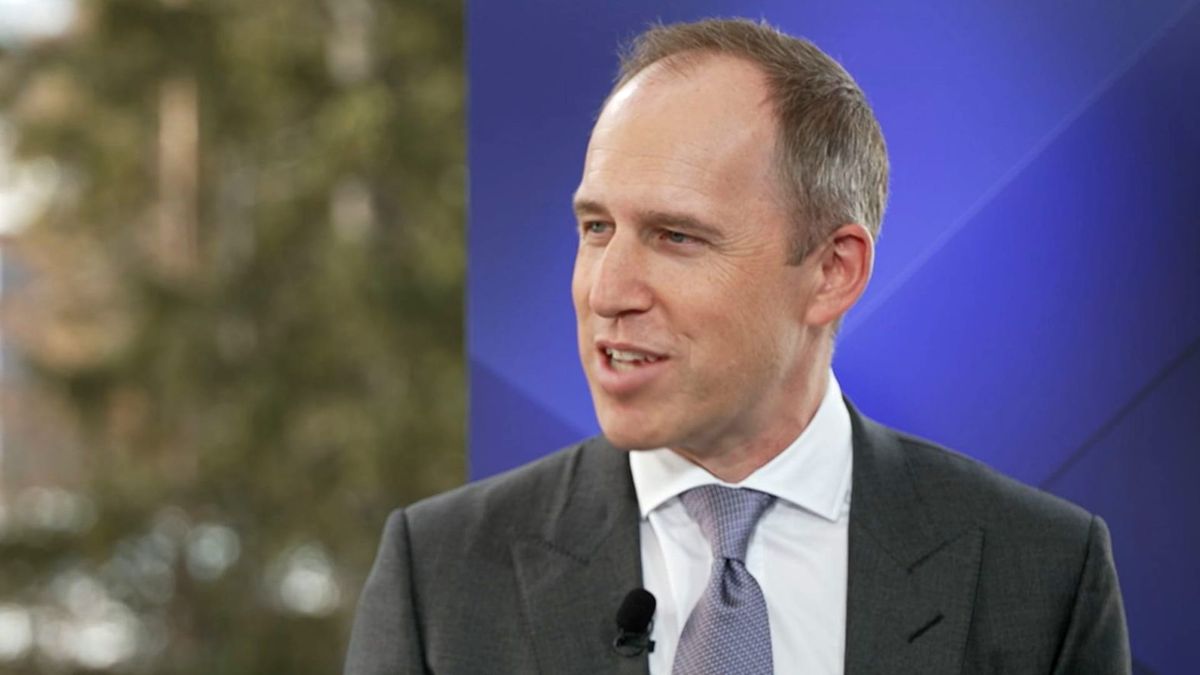
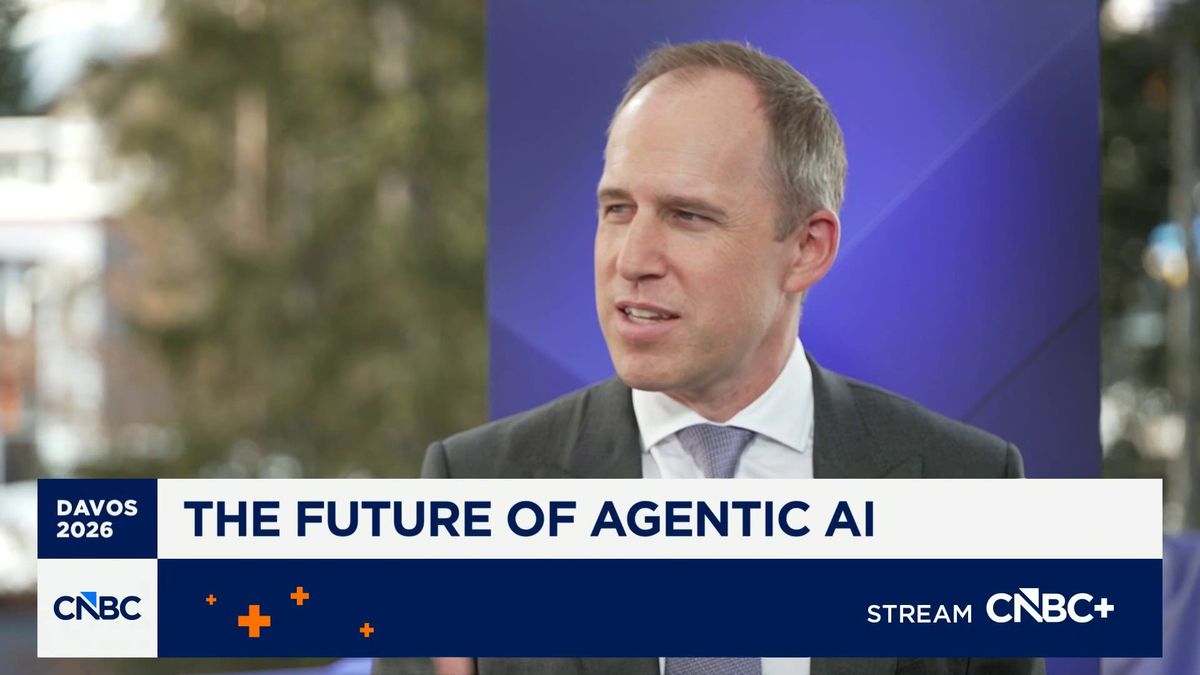
Bret Taylor, co-founder and CEO of Sierra, speaking to CNBC at the World Economic Forum in Davos, Switzerland on Jan. 22nd, 2026.
CNBC
Artificial intelligence startup Sierra is raising nearly a billion dollars in a new funding round, CNBC has learned, as venture capital investors search for winners in an ongoing deal spree.
The San Francisco-based company brought in $950 million in fresh capital at a $15.8 post-money valuation, led by Tiger and Google’s GV. Benchmark, Sequoia, Greenoaks and other existing investors also participated.
The startup was founded three years ago by OpenAI chairman and former Salesforce co-CEO Bret Taylor, with former Google executive Clay Bavor. Taylor was also chief technology officer at Facebook, and chairman of Twitter when Elon Musk bought the social media network. The Sierra founders met at Google, where Taylor was largely credited with helping create Google Maps and Bavor led virtual reality efforts and Google Labs.
Sierra sells AI customer service agents and is positioning itself as a leader in a new class of software companies built on top of foundational models from OpenAI and Anthropic. According to Taylor, the company leverages a “constellation of models” alongside its own fine-tuned proprietary layers.
Sierra topped $150 million in annual recurring revenue, or ARR, in eight quarters, according to the company. That growth timeline is unprecedented in traditional software and highlights “intense demand in the market,” Taylor said.
“There’s a really big addressable market and immediate opportunity,” Taylor said. “We’ve sort of digitized the last remaining analog channel, which is the telephone line — it’s a better experience. You don’t need to wait on hold. These agents are naturally multilingual.”
Taylor estimated that $400 billion is spent annually on customer service. A bulk of that, he said, is moving to AI agents.
AI competition
The funding round is the latest deal in what has been a white-hot space for investors. Deals of this size have come to define the recent venture landscape as investors flock to what they view as category leaders. There’s also an appetite to back names beyond behemoths like OpenAI and Anthropic, which have valuations creeping towards $1 trillion.
Taylor described buzzy AI coding agent companies like Cursor and Replit as the largest area of the market, followed by customer service agents. The new cash injection is to maintain a lead in what’s an increasingly crowded space, he said.
“There’s just a lot of competition. We are multiples larger than the next biggest and are trying to invest aggressively so that we can continue to expand our lead,” Taylor said.
Sierra’s customers are mostly enterprises like Prudential, Cigna, Blue Cross Blue Shield and Rocket Mortgage, as well as one in three of the world’s largest banks. The startup serves more than 40 percent of the Fortune 50, Taylor said.
Peter Fenton, general partner at Benchmark, was one of Sierra’s first investors and also participated in the Series E. He pointed to the startup’s revenue momentum and how much longer it took earlier generations of software companies to hit those same milestones.
“It’s ridiculous how quickly that happened.” Fenton said in an interview. “Sierra is by all measures the winner in the ‘customer experience’ category, if measured by objective facts like scale of revenue and quality of customer base.”
Fenton said the sheer size of this funding round should help Sierra maintain its lead.
The startup has also been able to court and quickly onboard traditional companies that aren’t always as quick on tech adoption, according to Fenton.
“You’re seeing some industries that historically have been slower to adopt realize that a watchful, waiting approach in AI is a path to extinction.”
Taylor is at the center of the AI boom as the chair of OpenAI. He likens the current AI boom to the early days of the internet, and says it will mint a new generation of trillion-dollar titans. Still, he anticipates a market correction within the next two years.
“When there’s this much authentic excitement about a market, you end up with too much capital, and too many companies,” Taylor said, forecasting a “culling effect” where capital dries up for all but the market leaders.
For Sierra, that means staying private for the time being. Taylor said an IPO is “definitely in our future,” but views being private as an advantage and a buffer while they go through the growing pains of rapid scaling.
Forrás: eredeti cikk