
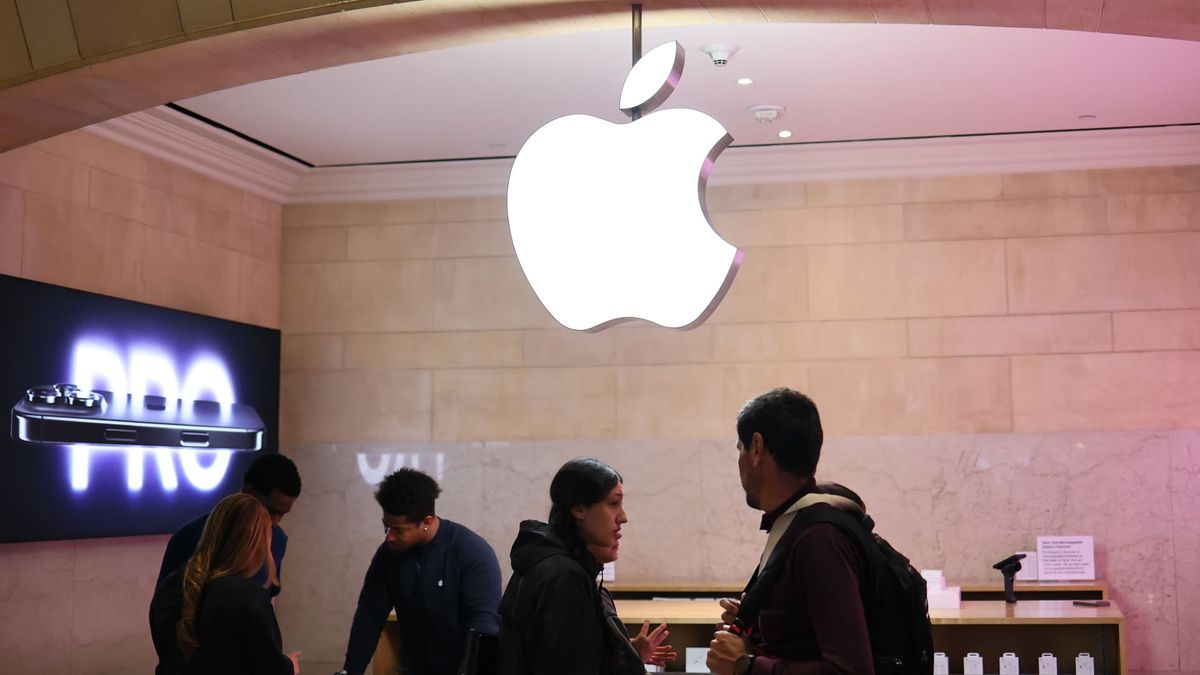
People shop at an Apple store in Grand Central Station in New York on April 4, 2025.
Michael M. Santiago | Getty Images
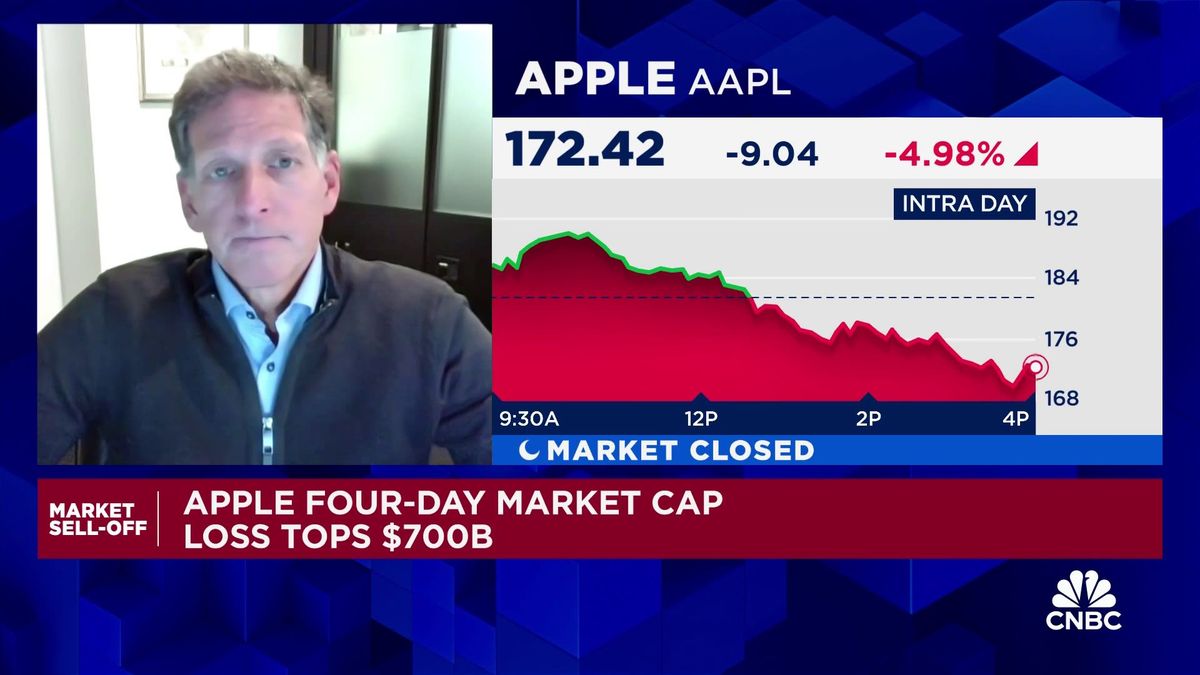
Though U.S. President Donald Trump’s 90-day pause on many of his “reciprocal tariffs” has given some firms and investors respite, America’s largest company, Apple, hasn’t been so lucky.
The Cupertino-based tech giant is heavily reliant on supply chains in China, which has seen its levies only continue to ramp up, with the U.S.’ cumulative tariff rate on Chinese goods now standing at 145%.
Thus, despite the U.S. trade situation looking more promising for much of the world, experts say that U.S.-China negotiations remain the most important variable for Apple.
“Apple could be set back many years by these tariffs,” Dan Ives, global head of technology research at Wedbush Securities, told CNBC, adding that the company had “had their boat flipped over in the ocean with no life rafts.”
The smartphone maker has been diversifying its supply chain from China for years, but out of the 77 million iPhones it shipped to the U.S. last year, nearly 80% came from China, according to data from Omdia.
The tech-focused research firm estimates that under current tariffs, Apple could be forced to increase its prices on phones sold to the U.S. from China by around 85% in order to maintain its margins.
“When the original China tariffs were at 54%, that kind of impact was serious, but manageable … but, it wouldn’t make financial sense for Apple to raise prices based on the current tariffs,” said Le Xuan Chiew, research manager at Omdia.
Few options
Apple reportedly shipped 600 tons of iPhones, or as many as 1.5 million units, from India to the U.S. before Trump’s new tariffs took effect, according to Reuters and The Times of India.
Apple and two of its iPhone producers did not respond to a CNBC inquiry.
Chiew said while this news is unconfirmed, stockpiling would’ve been the best option for the company to quickly mitigate the tariff impacts and buy themselves some time.
However, it’s not clear how long such stockpiles could last, especially as consumers increase iPhone purchases in anticipation of higher prices, he added.
According to Omdia, Apple’s medium-term strategy has been to reduce exposure to geopolitical and tariff-related risks, and it has appeared to focus on increasing iPhone production and exports from India.
Trump’s temporary halt will likely push tariffs on India to a baseline of 10% — at least for now — giving it a more favorable entry into the U.S.
However, the build-up of iPhone manufacturing in India has been a yearslong process. Indian iPhone manufacturers only began producing Apple’s top-of-the-line Pro and Pro Max iPhone models for the first time last year.
According to Chiew, ramping up enough production in India to satisfy demand could take at least one or two years and is not without its own tariff risks.
Exemptions?
In face of the tariffs, experts said the company’s best option is likely to appeal to the Trump administration for a tariff exemption for imports from China as it continues to ramp up its diversification efforts.
This is something the company had received — to an extent — during the first Trump administration, with some analysts believing it could happen again this time around.
“I still see some potential relief that can come in the form of concessions for Apple based upon its $500 billion U.S. commitment,” said Daniel Newman, CEO of The Futurum Group. “This hasn’t been discussed much — but I’m optimistic that companies that commit to U.S. expansion may see some form of relief as negotiations progress.”
Apple said in February that it would invest $500 billion in the U.S., creating 20,000 jobs.
Still, Trump has been clear that he believes Apple can make iPhones in the U.S.— though analysts have doubts about the plan. Wedbush analyst Ives has predicted that an iPhone would cost $3,500 if produced in the U.S. instead of the more typical $1,000.
Meanwhile, other analysts say that even a trade deal or tariff exemption may not be enough for Apple to avoid adverse business effects.
“Let’s assume that there is at least some thaw coming, either in a moderation of reciprocal tariffs targeting China or in a special exemption for Apple,” said Craig Moffett, co-founder and senior analyst at equity research publisher MoffettNathanson.
“That still wouldn’t solve the problem. Even a 10% baseline tariff poses an enormous challenge for Apple.”
Forrás: eredeti cikk