
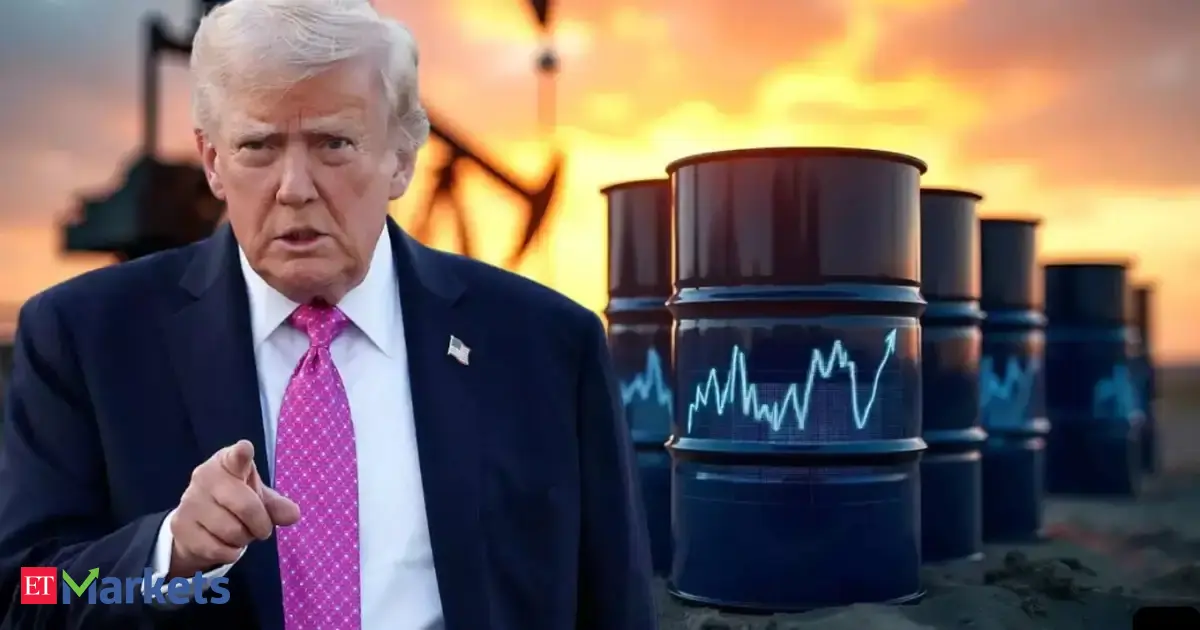
The U.S. action has injected fresh geopolitical risk into oil prices, even as traders weigh the longer-term possibility that Venezuelan supply could return under American oversight, analysts said.
The capture of Venezuela’s president has reintroduced a geopolitical risk premium into oil markets, even as prices remain under pressure after a steep decline last year. Oil prices fell more than 18% in 2025, their sharpest annual drop since 2020, amid growing concerns over global oversupply.
The development comes as OPEC+ meets on Sunday, with the group widely expected to keep output steady despite political tensions between key members Saudi Arabia and the UAE and the U.S. action in Venezuela, OPEC+ delegates told Reuters.
The eight OPEC+ producers—Saudi Arabia, Russia, the UAE, Kazakhstan, Kuwait, Iraq, Algeria and Oman—pump about half of the world’s oil. They raised output targets by around 2.9 million barrels per day from April to December 2025, equivalent to nearly 3% of global demand, before agreeing in November to pause further hikes for January, February and March. The meeting on Sunday is unlikely to change that policy, three OPEC+ sources told Reuters.
Venezuela holds the world’s largest proven oil reserves at about 303 billion barrels—more than Saudi Arabia—but production has collapsed due to years of mismanagement, underinvestment and sanctions, Reuters noted.
Analysts told PTI that while any immediate jump in Venezuelan output is unlikely given decayed infrastructure and unresolved legal issues, a U.S.-directed overhaul of the sector could eventually add supply to global markets, acting as a stabilising force on prices.What crude volatility means for Indian markets
For Indian markets, the immediate impact will be felt through oil prices.
India imports more than 85% of its crude oil needs, making domestic markets highly sensitive to sharp moves in global prices. Higher oil prices would weigh on the rupee, stoke inflation concerns and pressure interest rate expectations, while supporting upstream producers and hurting oil marketing companies, analysts told PTI.
Conversely, expectations that Venezuelan supply could return to global markets over time may cap the upside in oil prices, offering relief to Indian refiners and fuel consumers.
Indian refiners such as Reliance Industries, Nayara Energy, Indian Oil Corporation, HPCL-Mittal Energy and Mangalore Refinery have the complexity required to process Venezuelan heavy crude efficiently.
State-run ONGC Videsh Ltd (OVL) is also in focus. OVL jointly operates the San Cristobal oilfield in eastern Venezuela, but output has slumped to 5,000–10,000 barrels per day due to sanctions, according to PTI. Venezuela has failed to pay OVL USD 536 million in dividends due on its 40% stake in the field up to 2014, with a near-equivalent amount pending for subsequent years.
Once sanctions are eased, OVL could revive output to 80,000–1,00,000 barrels per day through additional wells and improved equipment, and potentially recover close to USD 1 billion in past dues from export revenues, officials and analysts told PTI.
Strategic upside for India, caution in the near term
Analysts cited by PTI said a US-led restructuring of Venezuela’s oil sector—bringing capital, technology, and operational discipline, could lift production significantly within a year, adding supply to global markets and reshaping crude trade flows.
For India, renewed Venezuelan exports would offer a strategic alternative to Middle Eastern crude, reduce exposure to geopolitical shocks, and strengthen its hand in price negotiations.
For now, however, Indian markets are likely to take their cue from crude price movements when trading resumes on Monday, with oil-driven volatility—rather than immediate supply gains—setting the tone at the open, analysts said.
(Disclaimer: Recommendations, suggestions, views, and opinions given by the experts are their own. These do not represent the views of The Economic Times)