

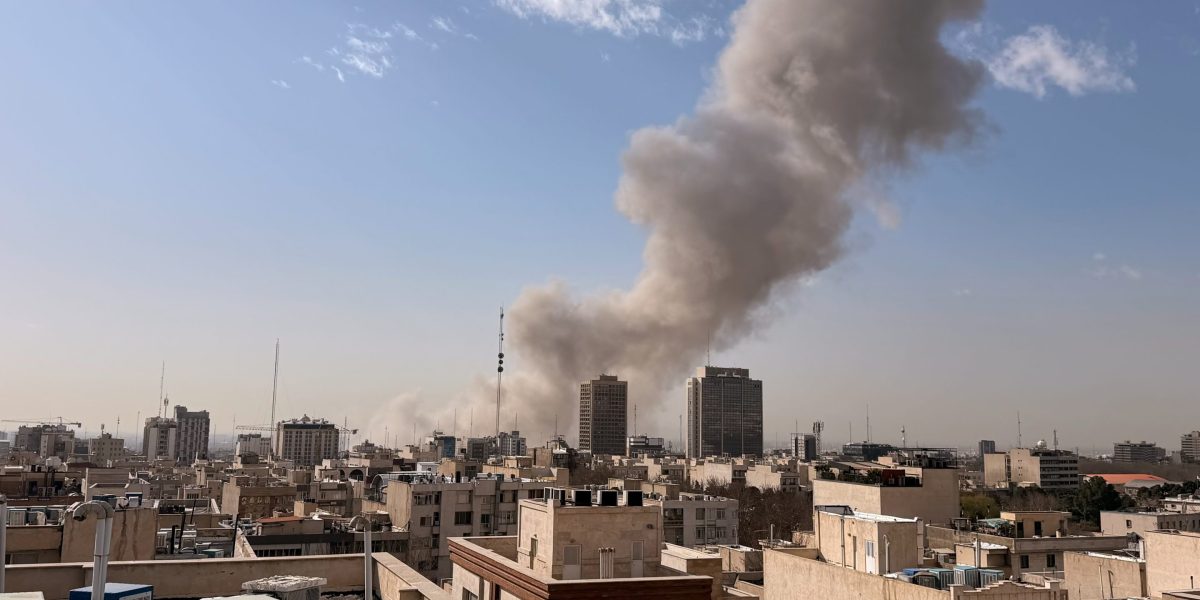
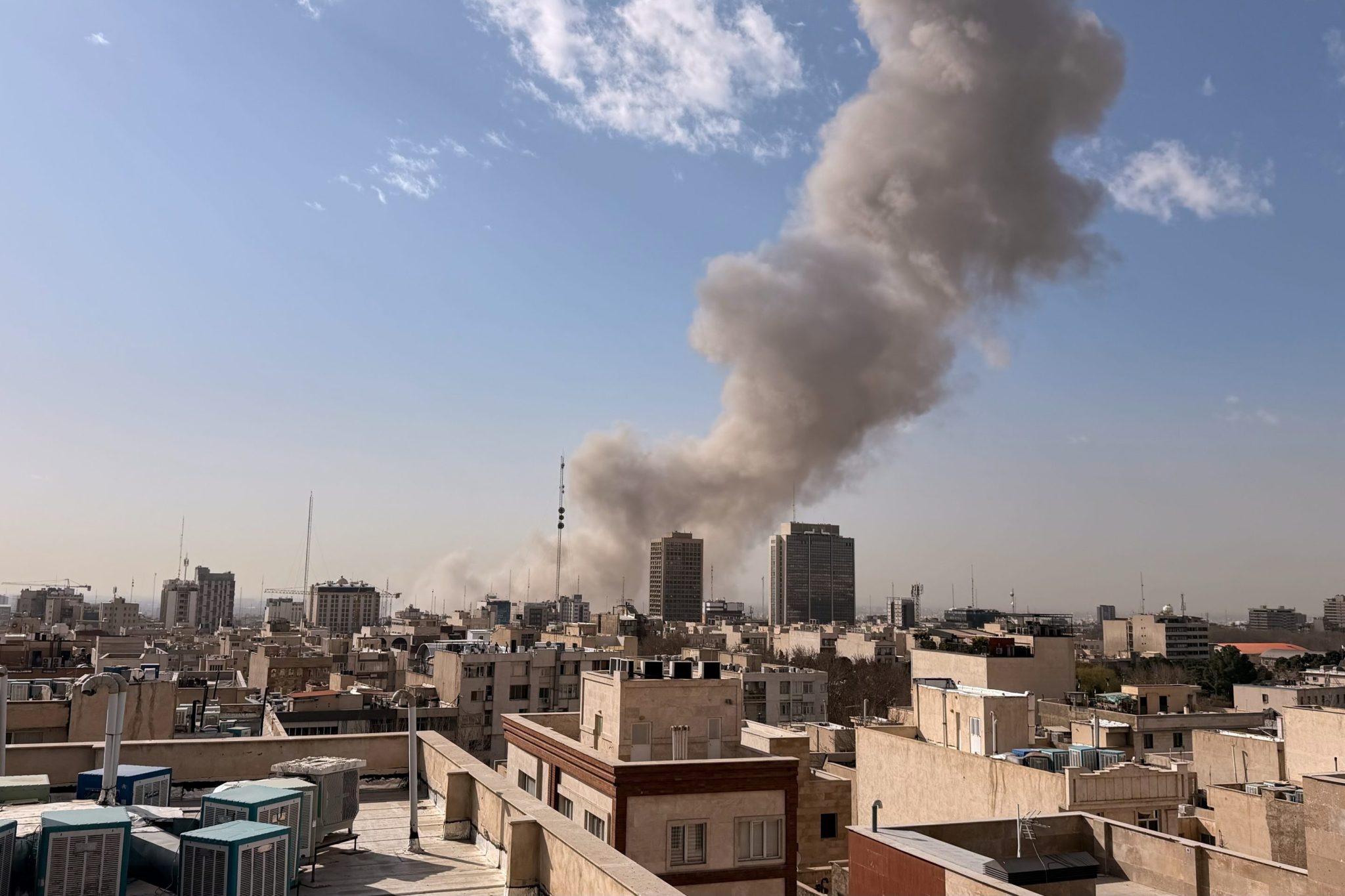
The U.S. and Israel conducted attacks on Iran early Saturday after weeks of negotiations and the biggest military build-up since the war in Iraq.
The airstrikes follow the 12 Day War last June, when the U.S. joined Israel’s air campaign to target Tehran’s nuclear facilities.
While President Donald Trump had reportedly considered limited attacks on the regime, sources told CNN that the U.S. involvement was “not a small strike.”
Israeli Defense Minister Israel Katz described the attack as being done “to remove threats,” according to the Associated Press.
The AP also reported that one of the strikes took place near the office of Iran’s Supreme Leader, Ali Khamenei. Iranian state media reported strikes in Tehran, Isfahan, Qom, Karaj, and Kermanshah.
Since early January, the U.S. has moved enormous military assets to the region, including two aircraft carriers, several destroyers armed with guided missiles, fighters, bombers, and air-defense systems.
At the same time, Trump dispatched envoys to engage in indirect talks with Iran, demanding the country stop uranium enrichment as well as its ballistic-missile program. But he grew impatient with negotiations in recent days.
Trump had initially warned Iran last month again killing protestors calling for the end of the regime and vowed that help was on the way. But since then, he has sounded alarms about Tehran rebuilding its nuclear capabilities.
The latest U.S. strike on Iran represents a wider offensive compared to its June attacks that hit a few nuclear sites.
That’s despite Arab Mideast allies urging Washington to hold off on new attacks as Iran has indicated it would retaliate more aggressively this time, perhaps with medium-range missiles, drones as well as via proxy forces like Hezbollah.
Domestic backlash against the U.S. attack on Iran was swift after some members of Congress sought a vote on military action.
“Acts of war unauthorized by Congress,” said Rep. Thomas Massie, R-Ky., on X.
The latest attack on Iran also comes less than two months after the stunning U.S. raid on Venezuela that captured dictator Nicolas Maduro.
While the country’s leader was removed, Trump left the rest of the government in place and has been dealing with Maduro’s vice president.
The Venezuela raid was lasted hours, but early indications point to the Iran attacks being the start of a more expansive, longer offensive.
That’s after years of the U.S. depleting its stockpiles of munitions and also supplying Ukraine and Israel with weapons too.
Former Defense Secretary Mark Esper told CNBC before the Iran strikes that the U.S. is not prepared for an extended campaign or to support allies in a longer-term war.
“We simply don’t have the defense industrial base to do that, let alone the stockpiles of key weapons such as such as Patriot and THAAD and then strike weapons such as JASSMs,” he said Friday morning.