

Automakers also outperformed as a weakening yen bolstered the value of offshore revenue, as well as on relief that China would not ban exports of so-called dual-use items – with both civilian and defence applications – to non-military Japanese firms.
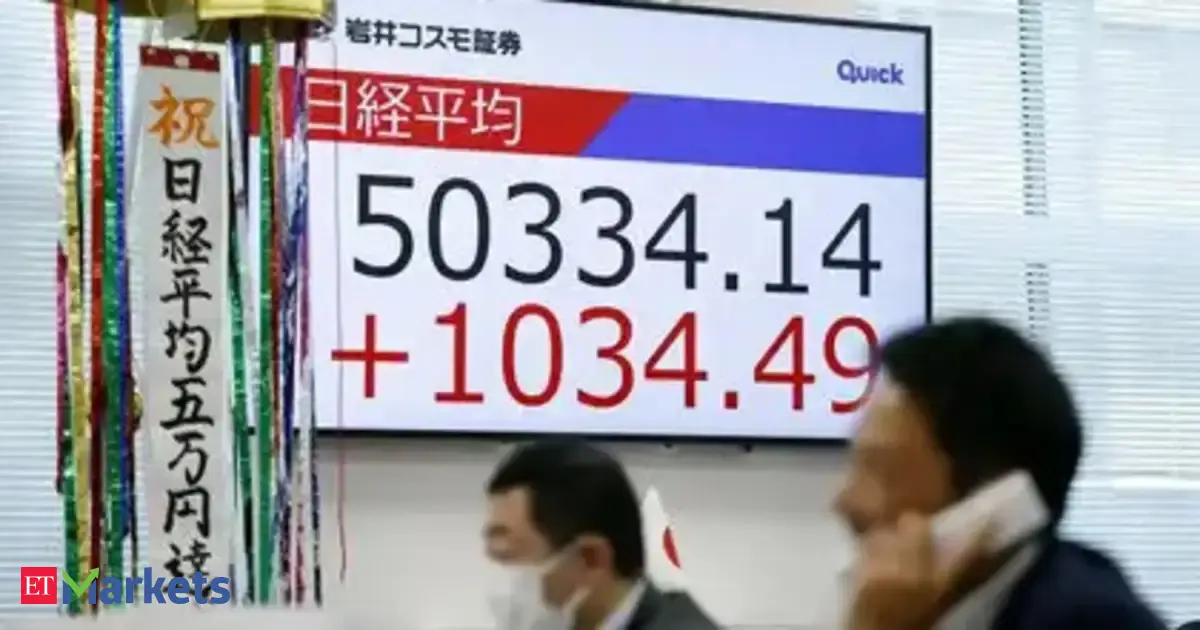
The Nikkei climbed 1.6% to close at 51,939.89.
Heavily weighted Fast Retailing’s 10.7% rally single-handedly contributed 592 points to the Nikkei’s total 823-point advance.
The broader Topix rose 0.9% to 3,514.11.
For the week, the Nikkei tacked on 3.2%, and the Topix gained 3.1%. Japanese markets will be closed on Monday for a national holiday.
Earnings were the main driver of the Japanese market, even with the crucial U.S. monthly non-farm payrolls report due later in the global day, which could reverberate across all geographies and asset classes. “What the U.S. jobs data says about the outlook for monetary policy will definitely be a focus for investors,” said Wataru Akiyama, an equities strategist at Nomura Securities.
Japan’s earnings season doesn’t pick up until later this month, but Yaskawa Electric’s results due later on Friday will be watched closely as the factory robot maker is a bellwether for the domestic manufacturing sector, Akiyama said.
Earnings this week have mainly been from retailers, and disappointing results from Aeon, despite record sales and operating profit, saw the stock slump 7.7% to be the Nikkei’s worst performer.
Mazda, the Japanese automaker that depends heavily on U.S. sales, jumped 4.3%. Toyota climbed 2.9%, Honda advanced 3.1%, and Nissan added 2.5%.
Of the Nikkei’s 225 components, 169 gained, 54 fell and two ended flat.