
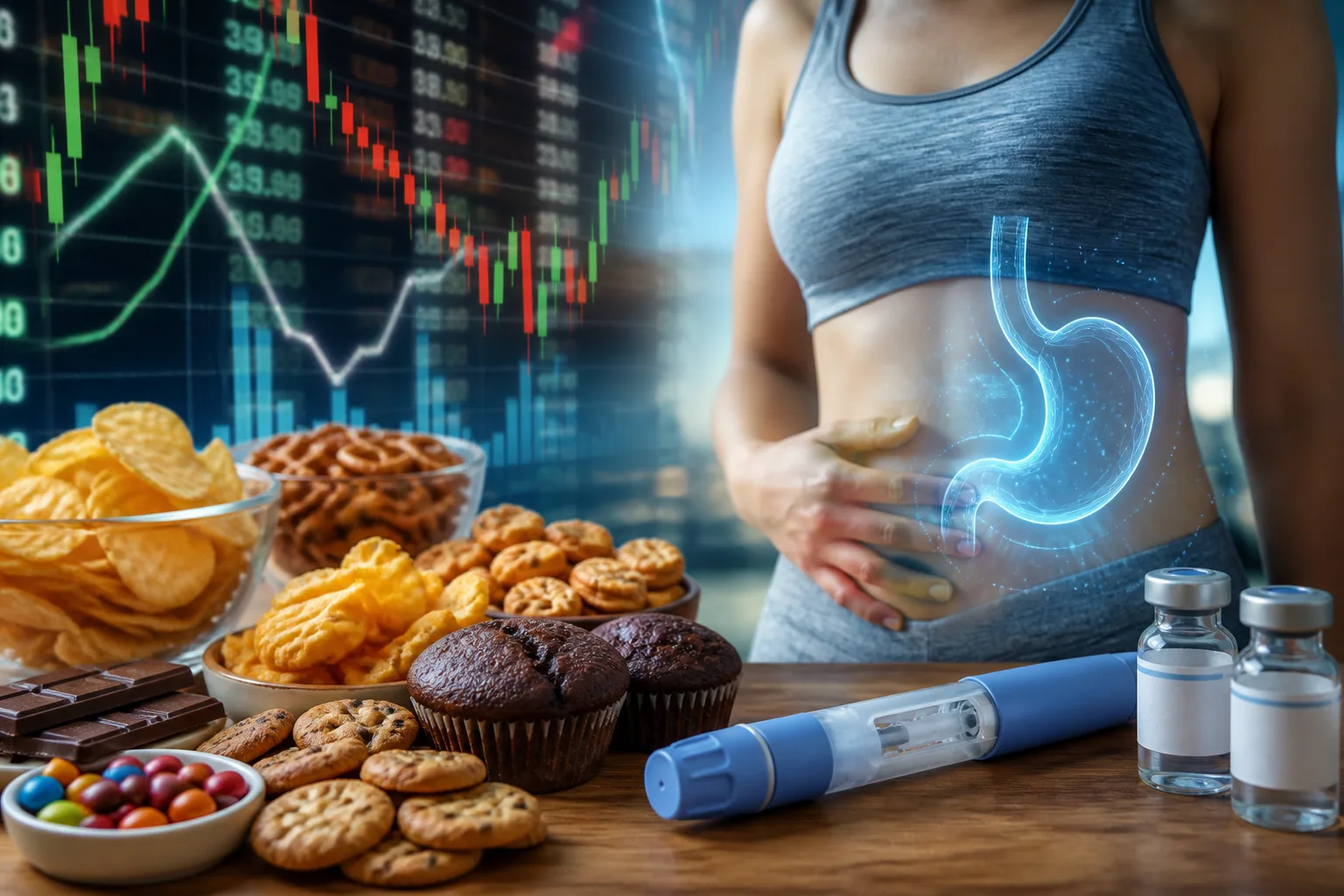
GLP-1 stocks have become a market story that reaches well beyond healthcare. As investors reassess the growth prospects for obesity drug stocks, they are also asking a practical question: if more consumers use appetite-suppressing medicines, what happens to snack makers, beverage companies, restaurants, grocers and other consumer staples stocks?
The answer is not simple. GLP-1 medications such as Ozempic, Wegovy, Mounjaro and Zepbound have increased investor attention on companies involved in diabetes and weight-management treatment. At the same time, the potential for changing eating habits has put food stocks under a sharper microscope. The risk is not that consumers stop eating; it is that purchase patterns may gradually shift toward smaller portions, higher-protein options, fewer impulse snacks and different shopping baskets.
Why GLP-1 Drugs Matter to the Consumer Sector
GLP-1 drugs are designed to affect appetite and metabolic signals, which is why Wall Street is watching their broader economic impact. For healthcare stocks tied to these treatments, the debate centers on demand, manufacturing capacity, insurance coverage, competition and long-term patient adherence. For food and retail companies, the question is more indirect: will these drugs change what people buy often enough to affect revenue growth?
Snack makers are especially exposed to the conversation because many of their products depend on routine consumption, impulse purchasing and household restocking. If a portion of consumers cuts back on sweet snacks, salty snacks or sugary drinks, the impact may show up first in volume trends rather than headline revenue. Companies can sometimes offset weaker volumes through pricing, mix improvements or innovation, but investors are likely to scrutinize whether growth is being driven by real demand or by temporary pricing power.
That is why GLP-1 stocks are now part of the same market discussion as consumer staples stocks. The success of obesity drug stocks could reshape investor expectations for food companies, even if the actual consumer impact takes years to measure.
What Investors Should Watch in Retail Earnings
Retail earnings season may offer clues, but investors should be careful not to overinterpret one quarter of data. Food purchases are influenced by inflation, wages, promotions, private-label competition, weather, holiday timing and consumer confidence. GLP-1 adoption is only one possible factor.
Still, there are several signals worth monitoring:
- Volume trends: Are snack and beverage units slowing, or are consumers simply trading down to cheaper brands?
- Basket composition: Grocers and big-box retailers may comment on demand for protein-rich foods, fresh products or smaller package sizes.
- Impulse categories: Convenience stores and checkout-heavy retailers could be more exposed if consumers reduce unplanned purchases.
- Brand innovation: Food companies may accelerate launches tied to portion control, satiety, protein content or “better-for-you” positioning.
- Management commentary: Executives may begin addressing GLP-1-related questions directly, especially if analysts keep raising the issue.
Retail earnings can also show whether the consumer is becoming more selective overall. If shoppers are under pressure from higher living costs, a slowdown in snacks may have little to do with medication use. Separating macroeconomic weakness from behavior change will be one of the biggest challenges for investors.
Snack Makers Are Not Standing Still
Large food companies have several ways to respond if eating habits evolve. Many already own broad portfolios that include snacks, breakfast items, drinks, frozen foods and health-oriented brands. That diversification can help, but it does not eliminate risk. The most vulnerable companies may be those heavily dependent on frequent consumption of calorie-dense products with limited exposure to categories that fit changing consumer preferences.
Possible strategic responses include smaller pack sizes, reformulated products, higher-protein snacks, reduced-sugar beverages and more emphasis on portion control. Companies may also lean on marketing that highlights convenience, taste and value rather than purely indulgent consumption. The winners among food stocks may be those that adapt early without alienating their core customers.
It is also worth noting that consumer behavior rarely changes in a straight line. Some GLP-1 users may reduce certain purchases significantly, while others may show little change. Some may shift spending from snacks to prepared meals, supplements, fitness products or fresh food. For investors, the key is not to assume a single outcome across the entire food sector.
Healthcare Winners Face Their Own Market Tests
The optimism around obesity drug stocks is based on a large potential market, but healthcare stocks in this area are not risk-free. Drugmakers must navigate supply constraints, payer coverage, regulatory scrutiny, side-effect monitoring, competition from new therapies and questions about long-term use. High expectations can make these stocks sensitive to any sign of slower uptake or tougher reimbursement conditions.
Investors should also distinguish between companies with direct exposure to GLP-1 drugs and those with only indirect exposure. Pharmaceutical manufacturers, contract manufacturers, packaging suppliers, medical device companies and pharmacy benefit managers may all be affected in different ways. Not every company mentioned in the GLP-1 conversation will benefit equally.
The Bigger Market Takeaway
The rise of GLP-1 stocks has created a rare crossover theme linking healthcare stocks, consumer staples stocks, food stocks and retail earnings. For snack makers, the issue is not an immediate collapse in demand but a possible long-term reset in consumption patterns. That possibility is enough to keep investors cautious about companies reliant on high-frequency snacking and sugary beverages.
For now, the smartest approach is to watch company commentary, category volumes and product innovation rather than rely on broad assumptions. GLP-1 drugs may become an important force in consumer behavior, but the market impact will likely vary by brand, category and household. Investors who separate evidence from hype will be better positioned to judge both the winners in obesity drug stocks and the risks facing traditional food companies.