
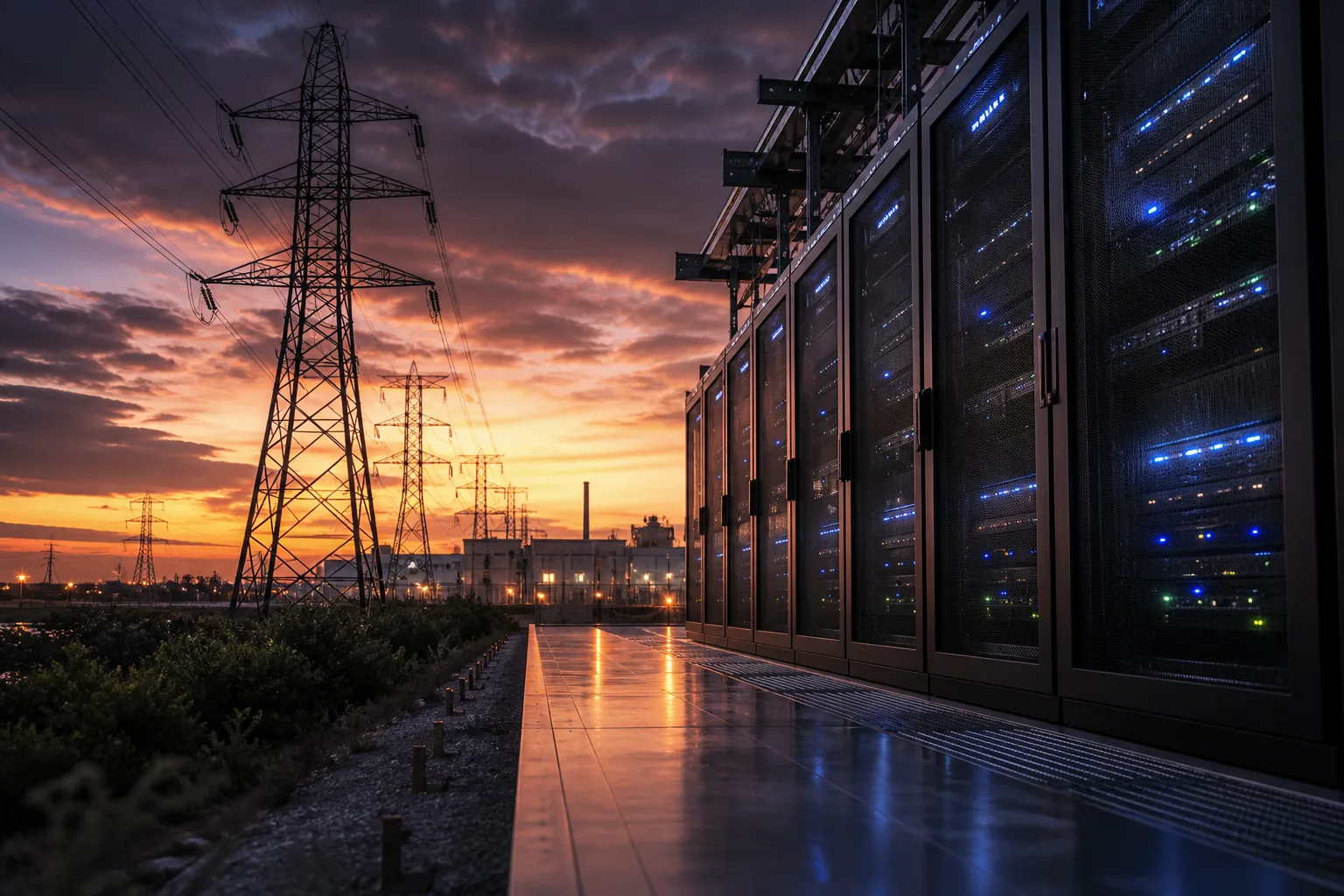
The investment case for data center REITs has become more complicated as artificial intelligence demand collides with a very physical constraint: the electric grid. Cloud platforms, chip-intensive AI workloads and enterprise digital transformation are driving demand for server capacity, but new data centers cannot open at scale without dependable power, transmission access and cooling infrastructure.
For investors in REIT stocks and AI infrastructure stocks, the issue is no longer simply whether demand exists. It clearly does. The more important questions are where capacity can be built, how long it will take, and which companies can secure power on terms that protect margins.
Why AI Data Centers Are Straining the Grid
Traditional data centers already require large, steady electricity loads. AI data centers raise the bar because training and running advanced models often depend on dense clusters of high-performance chips. These systems consume more power and generate more heat than conventional enterprise computing workloads.
That changes the economics of development. A data center landlord may have land, permits, customer interest and financing, but still be unable to deliver capacity if the local utility cannot provide enough electricity or if transmission upgrades are delayed. In some markets, grid connection has become one of the most important bottlenecks in the development timeline.
This power grid bottleneck is especially visible in established data center hubs where cloud providers and colocation operators have already concentrated infrastructure. These locations remain attractive because they offer network connectivity, skilled labor and proximity to customers. But the same clustering can intensify competition for electricity, land and cooling resources.
What This Means for Data Center REITs
Data center REITs own and operate facilities leased to cloud companies, enterprises, network providers and other technology customers. Their business model depends on high occupancy, long-term contracts and disciplined capital spending. When power availability becomes scarce, it can affect both growth and risk.
On the positive side, limited supply can strengthen the position of landlords that already control powered capacity. If a REIT has available megawatts in a constrained market, tenants may value that capacity more highly. That can support leasing demand and improve negotiating leverage, particularly for facilities that meet the needs of AI workloads.
On the negative side, new development becomes more complex. Projects may face longer lead times, higher construction risk and additional costs related to substations, backup power systems, cooling equipment or grid upgrades. These factors can pressure returns if not reflected in lease terms.
Investors should also distinguish between existing assets and future pipelines. A REIT with stabilized, fully powered data centers may benefit from scarcity differently than a company relying heavily on new projects that still need utility approval or interconnection.
Key Factors Investors Should Watch
For those analyzing REIT stocks tied to AI infrastructure, power strategy is now as important as square footage. Useful areas to monitor include:
- Power availability: Does the company have secured utility capacity, or are projects dependent on future grid upgrades?
- Location strategy: Is development concentrated in constrained markets, or diversified into regions with better access to electricity?
- Tenant mix: Are leases signed with financially strong cloud and enterprise customers, or is demand coming from more speculative users?
- Capital discipline: Are development returns likely to compensate for higher infrastructure and financing costs?
- Contract structure: Do leases allow the landlord to pass through power costs, or could energy volatility pressure margins?
- Sustainability commitments: Can the REIT meet customer expectations for renewable energy, efficiency and emissions reporting?
Power Is Becoming a Competitive Advantage
The market is beginning to separate data center operators by their ability to solve power constraints. Some companies are working more closely with utilities, signing long-term energy agreements, investing in efficiency, or exploring on-site generation and storage. Others are expanding into new markets where land and power may be more available.
This does not mean every data center should be built far from major technology hubs. Latency, connectivity and customer requirements still matter. But the old assumption that demand alone would justify new development is less reliable. The best-positioned operators are likely to be those that can align customer demand with credible power delivery schedules.
AI data centers also raise questions about community impact. Large facilities can bring tax revenue and jobs, but they may also increase pressure on local grids, water systems and land use planning. Public approval and regulatory coordination can influence project timelines, especially in regions where residents are sensitive to energy costs or infrastructure strain.
How to Think About the Sector
Data center REITs remain central to the AI infrastructure buildout, but the opportunity is not risk-free. Demand from artificial intelligence is real, yet growth depends on physical infrastructure that cannot be scaled instantly. Power generation, transmission, substations, cooling systems and permitting all move at a different pace than software adoption.
For long-term investors, the most attractive REITs may not simply be those with the biggest development pipelines. Quality of power access, balance sheet strength, tenant relationships and execution history matter. A company that can deliver capacity reliably in constrained markets may deserve a different evaluation than one whose growth depends on uncertain utility timelines.
The power grid bottleneck is not likely to end the expansion of AI infrastructure. It may, however, reshape where data centers are built and which landlords capture the best returns. In that environment, investors should treat electricity not as a background operating cost, but as a core strategic asset.