
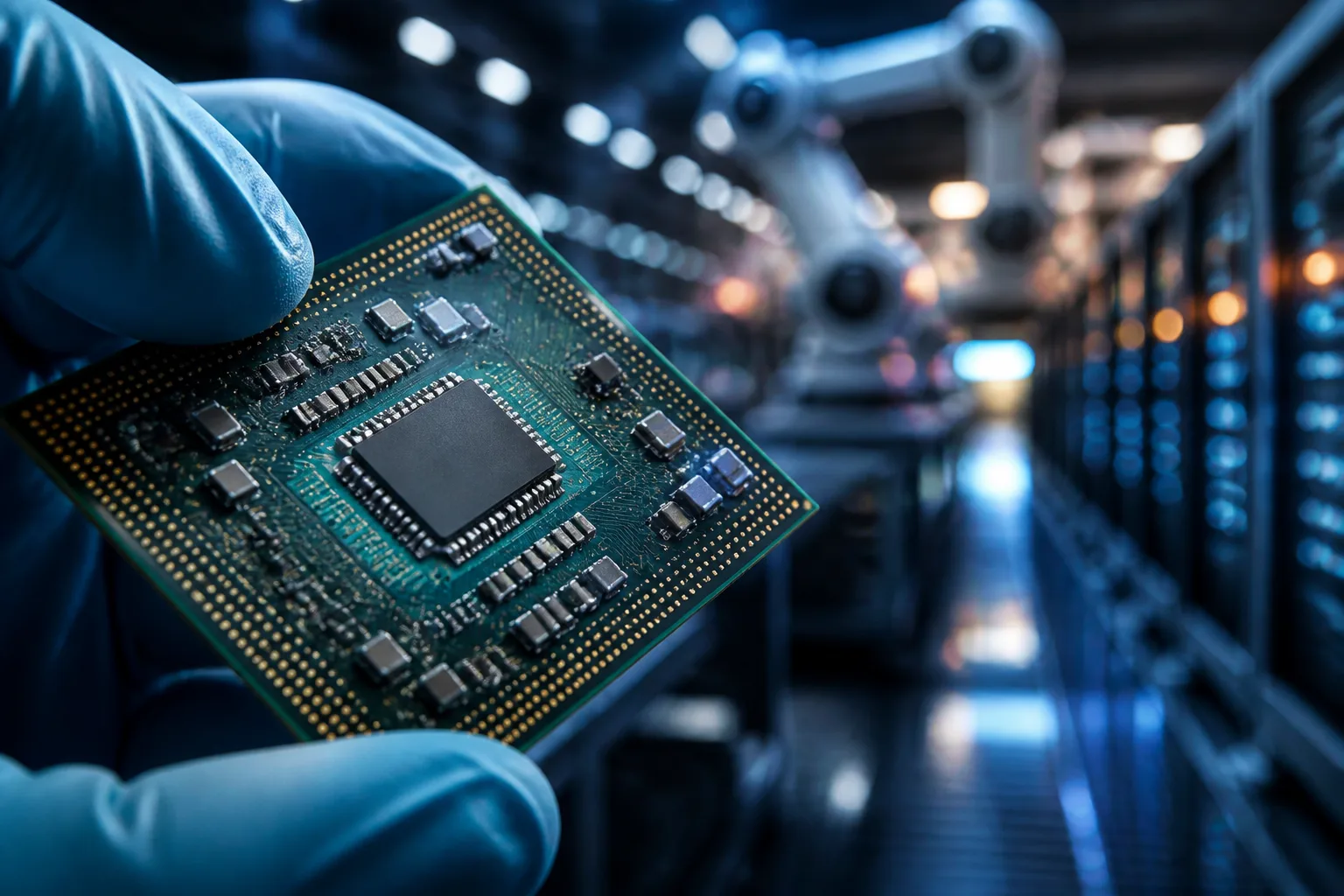
Memory chip stocks have become a key way for investors to track the buildout of artificial intelligence infrastructure. As cloud providers, chip designers and server manufacturers race to expand AI computing capacity, demand is shifting toward advanced memory products that can feed data-hungry accelerators efficiently. That shift is creating opportunities for some semiconductor stocks, but it is also exposing supply bottlenecks, customer concentration risks and the cyclical nature of the memory business.
Why AI Is Changing the Memory Market
Traditional memory demand has long been tied to PCs, smartphones, data centers and consumer electronics. Those markets still matter, but AI workloads are changing the mix. Training and running large AI models require enormous data movement between processors and memory. If memory bandwidth is insufficient, even the most advanced graphics processing units can sit idle while waiting for data.
This is why high-bandwidth memory, commonly known as HBM chips, has become strategically important. HBM is stacked vertically and placed close to advanced processors, helping deliver faster data access and lower power consumption compared with conventional memory configurations. For AI servers, that performance advantage can be critical.
The result is a more selective memory cycle. Not all memory products are benefiting equally. Commodity DRAM and NAND markets can remain sensitive to consumer demand and inventory swings, while AI memory demand is concentrated in advanced DRAM products that require sophisticated manufacturing, packaging and qualification processes.
HBM Chips Are the Center of the Supply Squeeze
The AI supply squeeze is not only about producing more chips. It is about producing the right kind of chips, at the right quality level, in coordination with leading AI accelerator platforms. HBM manufacturing is more complex than standard DRAM production, and customers typically require extensive validation before using a supplier’s memory in high-performance AI systems.
That creates barriers to entry and gives early leaders an advantage. SK Hynix has been widely viewed as a major beneficiary of the HBM boom, helped by its position in the Nvidia supply chain. Samsung and Micron are also competing aggressively, but success depends on execution, yield improvement, customer qualification and the ability to scale advanced products without disrupting other parts of the business.
For investors, the key point is that tight supply can support stronger margins, but it can also raise expectations. If capacity ramps faster than demand, or if customers shift designs, the same supply squeeze that lifted sentiment can turn into a source of volatility.
What It Means for Micron Stock and Global Competitors
Micron stock has attracted renewed attention because the company offers U.S.-listed exposure to the memory recovery and to AI-related memory demand. Its prospects depend not only on HBM adoption, but also on the broader health of DRAM and NAND markets. When inventories are lean and demand improves, memory makers can benefit from better pricing power. When customers pause orders or supply expands too quickly, earnings can come under pressure.
SK Hynix, Samsung and Micron each bring different strengths. SK Hynix has been closely associated with leading-edge HBM supply. Samsung has enormous scale and a broad semiconductor portfolio. Micron offers investors a cleaner memory-focused profile and potential leverage to improvements in high-value DRAM products.
However, none of these companies is insulated from the industry’s core risks. Memory is capital-intensive, technologically demanding and historically cyclical. Even in an AI-driven cycle, producers must spend heavily on equipment and process upgrades before returns are fully visible.
Investor Checklist for Memory Chip Stocks
Investors evaluating semiconductor stocks tied to AI memory demand should look beyond headline enthusiasm. Important factors include:
- HBM qualification progress: Winning approval from major accelerator makers can materially affect growth prospects.
- Product mix: A higher share of advanced DRAM can support profitability, while weaker commodity markets can dilute results.
- Capacity discipline: Overbuilding has historically hurt memory margins, even when long-term demand appeared strong.
- Customer concentration: Heavy reliance on a small number of AI chip or cloud customers can amplify swings.
- Capital spending: Advanced memory requires sustained investment, which can pressure cash flow during transitions.
- Geopolitical exposure: Semiconductor supply chains remain exposed to trade restrictions, export controls and regional manufacturing risks.
The Nvidia Supply Chain Effect
Nvidia remains central to the AI hardware ecosystem, and its supply chain influence extends well beyond GPUs. Memory suppliers that can support Nvidia’s high-performance platforms may benefit from strong demand visibility and closer technical collaboration. But the relationship also raises the bar. Suppliers must meet demanding performance, efficiency and reliability standards.
This dynamic can create a “winner-takes-more” pattern within the memory sector. Companies with qualified HBM products and dependable supply may capture premium demand, while laggards may remain more exposed to slower-moving commodity markets. Still, the competitive landscape can change as new product generations arrive and customers diversify suppliers to reduce dependence on any single company.
Bottom Line
The AI buildout has made memory chip stocks more strategically important, but it has not eliminated the risks that define the memory industry. HBM chips are in tight focus because they are essential to advanced AI systems, and suppliers tied to the Nvidia supply chain may enjoy meaningful advantages. At the same time, execution risk, capital intensity and cyclicality remain significant.
For investors, the most useful approach is to separate durable business progress from market excitement. AI memory demand is real, but stock performance will depend on which companies can scale advanced products, maintain quality, win key customers and avoid the familiar trap of oversupply. In this cycle, the winners may be those that combine technological leadership with disciplined capacity management.