
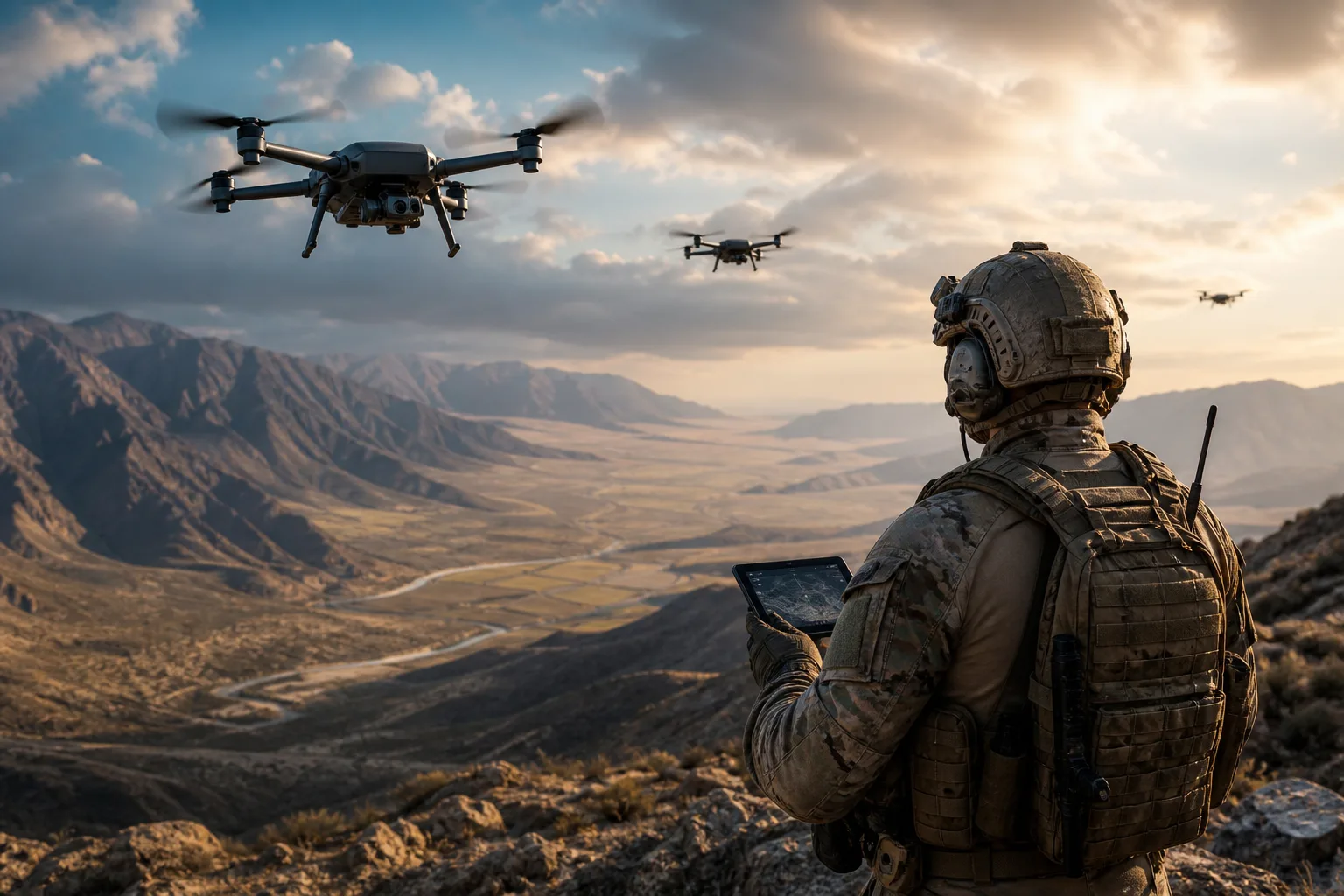
Defense stocks are increasingly being judged by how well they fit into a battlefield shaped by drones, autonomy, electronic warfare and rapid software upgrades. For decades, the aerospace and defense sector was dominated by large platforms such as fighter jets, submarines, missiles and armored vehicles. Those systems still matter, but recent conflicts have made clear that lower-cost unmanned systems can change tactics, strain air defenses and create new demand across the defense supply chain.
For investors, the “drone era” does not simply mean buying any company associated with unmanned aircraft. It means understanding how military technology budgets are shifting, which contractors can adapt, and where smaller drone stocks may complement or challenge traditional defense primes.
Why Drones Are Reshaping Defense Spending
Drones have become valuable because they combine surveillance, targeting and strike capabilities with flexibility. They can be used for battlefield reconnaissance, border monitoring, naval surveillance, loitering munitions and logistics support. Some are highly sophisticated military systems; others are modified commercial-style platforms adapted for wartime needs.
This matters for defense stocks because procurement priorities are evolving. Governments are not abandoning major weapons programs, but they are adding more emphasis on systems that are scalable, replaceable and connected to broader command-and-control networks. A drone is rarely valuable by itself. Its effectiveness depends on sensors, communications links, satellite connectivity, artificial intelligence tools, secure software and protection against jamming.
That creates opportunities across several categories:
- Unmanned aircraft and loitering munitions: Companies building tactical drones, long-endurance systems or one-way attack platforms.
- Sensors and payloads: Makers of cameras, radar, infrared systems and targeting technology.
- Electronic warfare: Firms that help drones operate in contested environments or defend against hostile drones.
- Autonomy and software: Businesses developing mission planning, swarming, navigation and data-analysis tools.
- Counter-drone systems: Providers of detection, tracking and interception technologies for military bases, ships and critical infrastructure.
Traditional Defense Giants Still Have an Advantage
Large aerospace and defense contractors are not being displaced overnight. Companies with established government relationships, classified program experience and proven production capacity remain central to national security procurement. They also have the balance sheets to acquire smaller technology firms or integrate drone capabilities into existing platforms.
Major contractors can benefit from the drone era in several ways. They may build large unmanned aircraft, supply command systems, integrate drones with fighter jets and ground forces, or provide missiles and sensors used in drone-enabled operations. In many cases, the key investment question is not whether a company has a “drone product,” but whether it can turn unmanned systems into durable program revenue.
Scale also matters. Defense ministries tend to favor suppliers that can meet strict reliability, cybersecurity and compliance requirements. A start-up may have impressive technology, but winning defense contracts often requires patience, testing, certifications and the ability to manufacture consistently.
Where Drone Stocks Could Offer Growth
Smaller drone stocks may appeal to investors looking for higher-growth exposure to unmanned systems. These companies may specialize in tactical drones, autonomous navigation, defense software or counter-drone equipment. Some are positioned at the intersection of defense, robotics and artificial intelligence, which can attract attention from both military and technology investors.
However, this part of the market can be volatile. A promising prototype does not always become a large procurement program. Revenue may depend on a small number of contracts, and production can be difficult to scale. Investors should look beyond press releases and ask practical questions:
- Does the company already have government customers or fielded systems?
- Is the technology defensible, or could larger contractors replicate it?
- Can the company manufacture at military-grade quality?
- How dependent is it on a single conflict, customer or budget cycle?
- Does it have enough cash and operational discipline to survive long procurement timelines?
Drone stocks can offer upside, but they require careful due diligence. The most attractive companies are often those that solve a specific operational problem rather than those using broad buzzwords like “AI-powered defense” without clear contract traction.
Geopolitical Investing and the New Defense Cycle
Geopolitical investing has become more prominent as governments reassess national security risks. Tensions in Europe, the Middle East and the Indo-Pacific have reinforced the importance of readiness, stockpiles and advanced military technology. Drones are part of that discussion because they can be produced and deployed more flexibly than many traditional platforms.
Still, investors should avoid assuming that every geopolitical shock automatically benefits every defense company. Defense budgets are political decisions. Contract awards can be delayed, priorities can shift, and export approvals may limit international sales. Companies may also face supply-chain constraints, especially for specialized chips, batteries, engines and optical components.
Another factor is the changing cost curve of warfare. Militaries are looking for affordable systems that can be used at scale. That may pressure suppliers accustomed to high-margin, complex platforms. Winners in the drone era may be those that combine defense-grade performance with faster production cycles and software-driven upgrades.
What Investors Should Watch Next
For investors evaluating defense stocks, the drone era adds several important signals to monitor. Contract announcements matter, but so do partnerships, production capacity, integration with existing military systems and evidence that a company’s technology is being adopted beyond trials.
Key indicators include:
- Procurement language: Watch whether defense agencies prioritize autonomy, counter-drone systems and unmanned teaming.
- Partnerships with primes: Smaller technology firms may gain credibility by working with established contractors.
- Software capability: Drones increasingly depend on data processing, secure communications and rapid updates.
- Counter-drone demand: As drones proliferate, demand for detection and defense systems may grow across military and civilian infrastructure.
- Manufacturing resilience: Companies that can scale production and secure critical components may have an advantage.
The defense sector is entering a period where hardware, software and autonomy are becoming inseparable. Traditional aerospace and defense companies will remain powerful, but the competitive landscape is widening. For investors, the challenge is to distinguish between genuine military technology adoption and market hype. The drone era is real, but the best opportunities in defense stocks will likely belong to companies that can prove their systems work, scale and fit into the modern battlefield.