

When Mr. Trump signed an executive order in March that promised to restore the Smithsonian Museum “to its rightful place as a symbol of inspiration and American greatness,” historians and other observers were anxious about what he meant.
Months later, the president confirmed their worst fears.
“The Smithsonian is OUT OF CONTROL, where everything discussed is how horrible our Country is, how bad Slavery was, and how unaccomplished the downtrodden have been,” he wrote in a social media post in August.
The post, which came a week after the White House ordered a review of the museum’s exhibitions, offered the most candid look to date at what many of Mr. Trump’s executive actions on diversity have targeted: the history and experience of Black people in the United States.
High-profile Black leaders have been fired as the president builds an overwhelmingly white administration. Federal websites have been scrubbed to sanitize the country’s history of slavery and discrimination. And other government agencies, like the National Park Service, have also removed exhibits on slavery. At the same time, Mr. Trump has reinstalled statues that glorify Confederate soldiers.
In his first year, Mr. Trump has set out to rewrite the nation’s history by erasing the scars of its original sin.
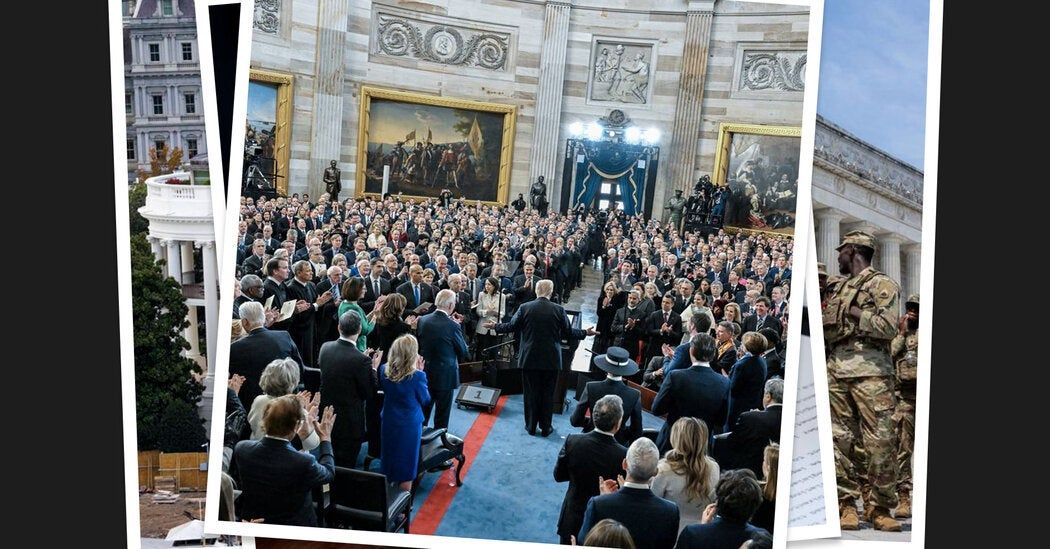
Photographs by Al Drago, Doug Mills, Maansi Srivastava and Bettmann Archive, via Getty Images.
Forrás: eredeti cikk